Drip Irrigation for Southern California Home Vineyards: The June–July Scheduling Guide
June 29 marks the turn into July — the single most water-intensive month in any Southern California home vineyard. Miss your irrigation window by even a few days and you risk uneven berry sizing, loose clusters, and shoot stress that carries into next season. Get it right, and you lay the foundation for concentrated, balanced fruit. This guide covers the schedule, the numbers, and the logic behind regulated deficit irrigation so you can manage your vines with confidence through the summer.
One important note before you adjust a valve: California law governs how much water you can draw and from what source. If you rely on a well or surface water for irrigation, review the details at our guide to California water rights for home vineyard irrigation before building a schedule around supply you may not have uninterrupted access to.
Why July Is the Critical Irrigation Month for SoCal Vineyards
In Southern California, grapevine water demand builds steadily from bud break in spring and peaks in July. According to UC Master Gardeners research, the need for supplemental irrigation "peaks in July and continues into fall as long as there is no rain and green leaves remain on the vine." ( UC Master Gardeners of Sacramento County.) A mature, trellised vine in full sun can consume up to 10 gallons of water per day at peak. In SoCal's inland counties — San Bernardino, Riverside, and Orange County — where July temperatures regularly exceed 95°F, demand runs at the high end of that range.
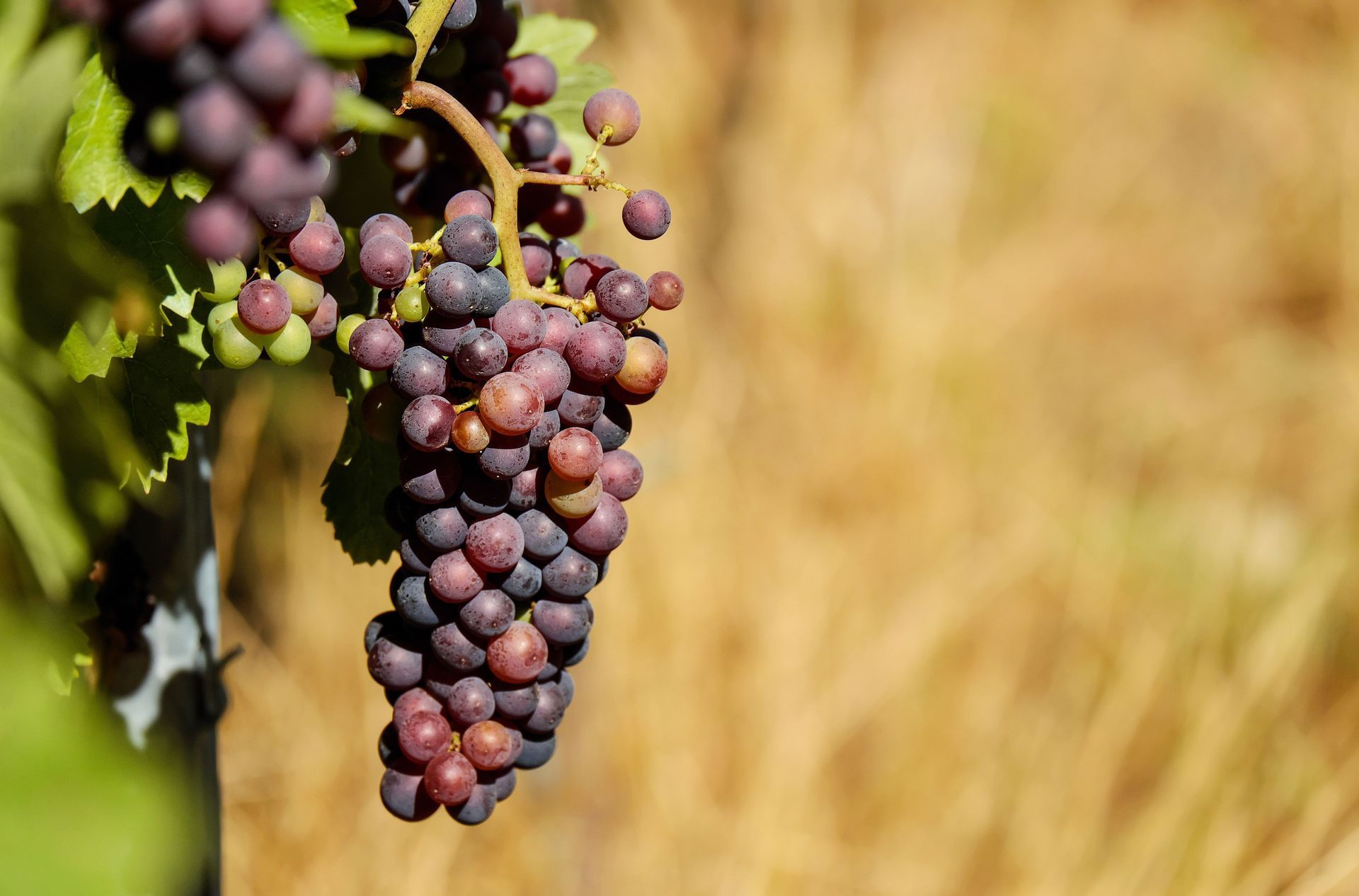
At the vine level right now, your clusters are in the post-fruit-set phase, sizing up before veraison. This is the window where water management directly determines final cluster weight, berry size, and the quality of the wine those grapes will produce. Over-irrigate and you push excessive vegetative growth, dilute fruit concentration, and invite disease pressure inside the canopy. Under-irrigate and you risk stressed foliage, impaired sugar accumulation, and permanent damage to shoot tissue.
The goal is controlled, deliberate water management — not "keep the soil wet" and not "let it dry out." That precision is what professional vineyard management delivers, and it's why a generic calendar schedule consistently underperforms relative to a plan tuned to your specific microclimate, soil profile, and varietal.
The Three-Phase Summer Irrigation Strategy
UC Cooperative Extension advisors orient grapevine irrigation around three phenological phases. Mark Battany, water management and biometeorology advisor with UC Cooperative Extension, explained the framework at a Lodi Wine Growers event: "The concepts can be applied anywhere — this is pretty much global in nature." ( Ceres AI, citing UC Cooperative Extension.) For a SoCal home vineyard in late June and July, you are working in phases two and three.
Phase 1 — Bud break through fruit set (spring): Irrigation supports rapid canopy development. Adequate moisture during this phase prevents uneven bud break, stunted shoot growth, and poor flower-cluster development. According to the FAO's research compendium on grapevine water management, "water stress during this time may result in uneven bud break and stunted shoot growth" and impairs pollen viability and berry set. ( FAO, Deficit Irrigation Practices: Grapevines.) This phase is behind you — but deficits here echo through the rest of the season in reduced cluster counts and loose fruit set.
Phase 2 — Post fruit set through veraison (now through approximately mid-July): The most deliberate management phase. Mallika Nocco, UC Cooperative Extension specialist and director of the Conservation Irrigation Lab, explains the logic: "There is this relationship between water and sugar and acidity. It's done to control the quality of the grape." ( Ceres AI.) Scale back irrigation from spring levels to create controlled water stress. This limits excessive vegetative growth, promotes fruit-canopy balance, and sets the stage for more concentrated flavors at harvest.
Phase 3 — Veraison through harvest (mid-July onward): Once berries begin to color and soften, irrigation shifts to canopy maintenance — keeping foliage functional for ripening without stimulating new vegetative growth. Moderate water stress helps grapes reach desired sugar levels. Do not stop irrigating entirely; the canopy still needs support, and abrupt stress after veraison causes berry shrivel.
How Much Water Does Your Vine Actually Need?
For practical scheduling, the UC Cooperative Extension publishes drip irrigation tables derived from decades of California vineyard research. For a small-to-medium canopy vineyard on a single-wire trellis system (50–60% ground coverage), the late-June through July schedule runs:
- June 22–30: approximately 3,350 gallons per acre per day
- July 1–14: approximately 3,550–3,700 gallons per acre per day (peak demand begins)
- July 15–31: approximately 3,750–3,800 gallons per acre per day (absolute peak)
For a large-canopy vineyard covering 75%+ of the ground surface, demand runs 25–35% higher — 4,700 to 5,050 gallons per acre per day in July. If your vines are vigorous and have filled their trellis, plan accordingly.
For a typical home vineyard of 100–300 vines, divide the per-acre figure by your vine count. At standard 8 ft × 6 ft spacing (~907 vines per acre), peak July demand works out to approximately 4–5 gallons per vine per day for a small-canopy system. A 1-gallon-per-hour drip emitter running 4–5 hours daily hits that target. In a heat event above 100°F, run longer or add a second emitter per vine. See our SoCal home vineyard heat wave guide for emergency irrigation protocols during temperature spikes.
Four variables that adjust the schedule up or down:
- Canopy size: Vigorous, well-filled canopies transpire significantly more than compact or newly trained vines. UC Extension data shows large-canopy vineyards using 25–35% more water than small-canopy systems at the same stage.
- Soil type: Sandy soils drain quickly and require more frequent, shorter cycles. Clay soils hold water longer but risk saturation and root disease if irrigated too heavily. Most inland SoCal properties have sandy loam to clay-loam — test your drainage before locking in a cycle length.
- Vine age: Young vines (years 1–2) have limited root systems and need more frequent, lighter applications than established plants. Their water management follows different rules than mature canopy scheduling.
- Post-thinning load: After cluster thinning in late June, each remaining cluster carries a higher per-berry water demand as the vine concentrates resources. Revisit your schedule after thinning.
Regulated Deficit Irrigation: Why Slightly Stressed Vines Make Better Wine
Regulated deficit irrigation (RDI) is the deliberate application of less water than a vine can use during specific growth phases — not neglect, but precision-induced stress. The research is consistent. According to Lodi Growers, deficit irrigation "reduces irrigation costs and bunch rot, but also improves fruit quality through increased fruit acidity, lowered pH, and increased phenolics (color, aroma, flavor, and astringency)." ( Lodi Growers, Regulated Deficit Irrigation — Part I.)
For red wine varieties — which describes most SoCal home vineyards (Zinfandel, Cabernet Sauvignon, Syrah, Grenache) — moderate water stress in the post-fruit-set phase is directly linked to more anthocyanin pigments, more fruit-forward aromatics, and better overall wine quality. A multi-season Lodi trial in Cabernet Sauvignon found that full irrigation produced maximum tonnage but wine quality "suffered by high pH, reduced color, and character." Deficit plots yielded less fruit but produced significantly better wine. ( Vineyard Team, Regulated Deficit Irrigation Management for Winegrapes.)
For SoCal home vineyards, the practical RDI target for red wine varieties is midday leaf water potential of -13 to -15 bars — achievable with regulated deficit without triggering the severe stress that permanently reduces vine vigor. Among common SoCal reds, the Vineyard Team notes that "Merlot [is] most sensitive followed by Cabernet Sauvignon, and Syrah with Zinfandel of this group being the most tolerant." If you're growing Zinfandel — historically rooted in Rancho Cucamonga, Claremont, and the broader Inland Empire — you have a slightly wider deficit margin than a Merlot or Cab grower.
Applying RDI effectively requires monitoring soil moisture or vine water status, not estimating from a calendar. This is where professional management makes a measurable difference. MyHomeVineyard.com builds custom irrigation schedules for each property based on microclimate, soil profile, and varietal — because the right schedule for a Temecula hillside Syrah is not the same as for a flat Yorba Linda Zinfandel. Request a vineyard consultation and we'll design a schedule built around what you're growing and where.
Reading Your Vines: Irrigation Stress Signals
You do not need a pressure bomb to read basic vine water status. These visual cues tell you when to intervene:
Signs of under-irrigation:
- Leaf edges rolling or cupping inward in the morning (distinct from normal midday heat wilt, which is temporary and resolves by evening)
- Shoot tips stopping elongation abruptly — useful as a controlled RDI signal, but too sudden a stop indicates severe stress
- Premature yellowing of basal leaves on the shoot
- Berry sizing stalling before the cluster reaches pre-veraison expected size
Signs of over-irrigation:
- Vigorous, fast-growing lateral shoots persisting through mid-summer — excessive vegetative push competes with fruit development
- Dense interior canopy that resists canopy management and blocks light and airflow to the fruit zone
- Yellow or pale interior leaves from nutrient dilution caused by excess water uptake
- Elevated powdery mildew pressure inside the canopy — dense, moist foliage is the ideal environment
One more connection worth making: Pierce's Disease pressure is higher in vineyards adjacent to riparian corridors or irrigated landscapes where glassy-winged sharpshooter populations concentrate. An overly lush, water-pushed canopy can make your vines more attractive to vector insects. Our guide on Pierce's Disease treatment for SoCal vineyards covers the management connection between irrigation, vigor, and disease risk.
How MyHomeVineyard.com Approaches Irrigation on SoCal Properties
Every vineyard we manage receives a microclimate-specific irrigation plan, not a template schedule. The variables that matter — sun exposure, row orientation, soil depth and texture, vine age, trellis system, and variety — interact differently across San Bernardino, Riverside, and Orange County properties. A hillside Temecula vineyard on decomposed granite drains radically differently from a flat Chino Hills property on amended fill soil. A custom plan is not optional; it's the difference between grapes worth making into wine and a season of frustrating results.
Irrigation scheduling is built into every vineyard management program we run. We have been doing this exclusively in SoCal for 13 years — starting with vineyard builds in Rancho Cucamonga and now managing estates across the Inland Empire and surrounding counties. The downstream result: nearly every client we manage long-term ends up with their own custom wine from our private winemaking facility in Historic Rancho Cucamonga. Well-irrigated, well-managed grapes produce fruit worth putting in a bottle. That connection between irrigation discipline and wine quality is why we take this part of the growing season seriously.
If you're uncertain about your schedule heading into July, address it now. The cost of a consultation is far less than the crop you can lose to a heat stress event in three weeks. Contact us to discuss your vineyard and what it needs for the rest of the growing season.
Frequently Asked Questions: SoCal Home Vineyard Drip Irrigation
How often should I run my drip system in July?
Most established SoCal home vineyards run daily or every-other-day cycles in July, calibrated to deliver 4–7 gallons per vine per day. Sandy soils: irrigate more frequently in shorter cycles. Clay soils: longer intervals with deeper penetration. Avoid late-night irrigation if you're managing powdery mildew — early morning cycles are better for canopy drying.
Can I overwater during a heat wave?
Yes. A heat spike increases transpiration, but the vine's water uptake rate has limits. Saturating the soil repeatedly does not speed delivery — it promotes root disease and nutrient leaching. During a heat event, increase run frequency slightly rather than adding volume per cycle.
Does regulated deficit irrigation work for white varieties?
Yes, but with less aggressive stress targets. White varieties are generally more sensitive to water deficit than reds. Research suggests white varieties maximize quality at approximately 60–70% of full seasonal water use. If you're growing Chardonnay or Viognier in SoCal, your RDI window is narrower and the -13 to -15 bar target used for reds does not apply.
My vines were planted this year — does this schedule apply?
No. First-year vines have shallow root systems and cannot tolerate the same controlled deficit as established plants. Water young vines more frequently (every 1–2 days in peak summer) and prioritize survival and root development over wine-quality optimization. Regulated deficit irrigation is a tool for vines in their third season or later.
Can MyHomeVineyard.com take over irrigation management for an existing vineyard?
Yes — we work with existing vineyard owners who cannot find reliable management help every season. Many were installed years ago and have struggled to maintain consistent care. Contact us
to discuss what you have and what it needs for the remainder of this growing season.
Recent Posts