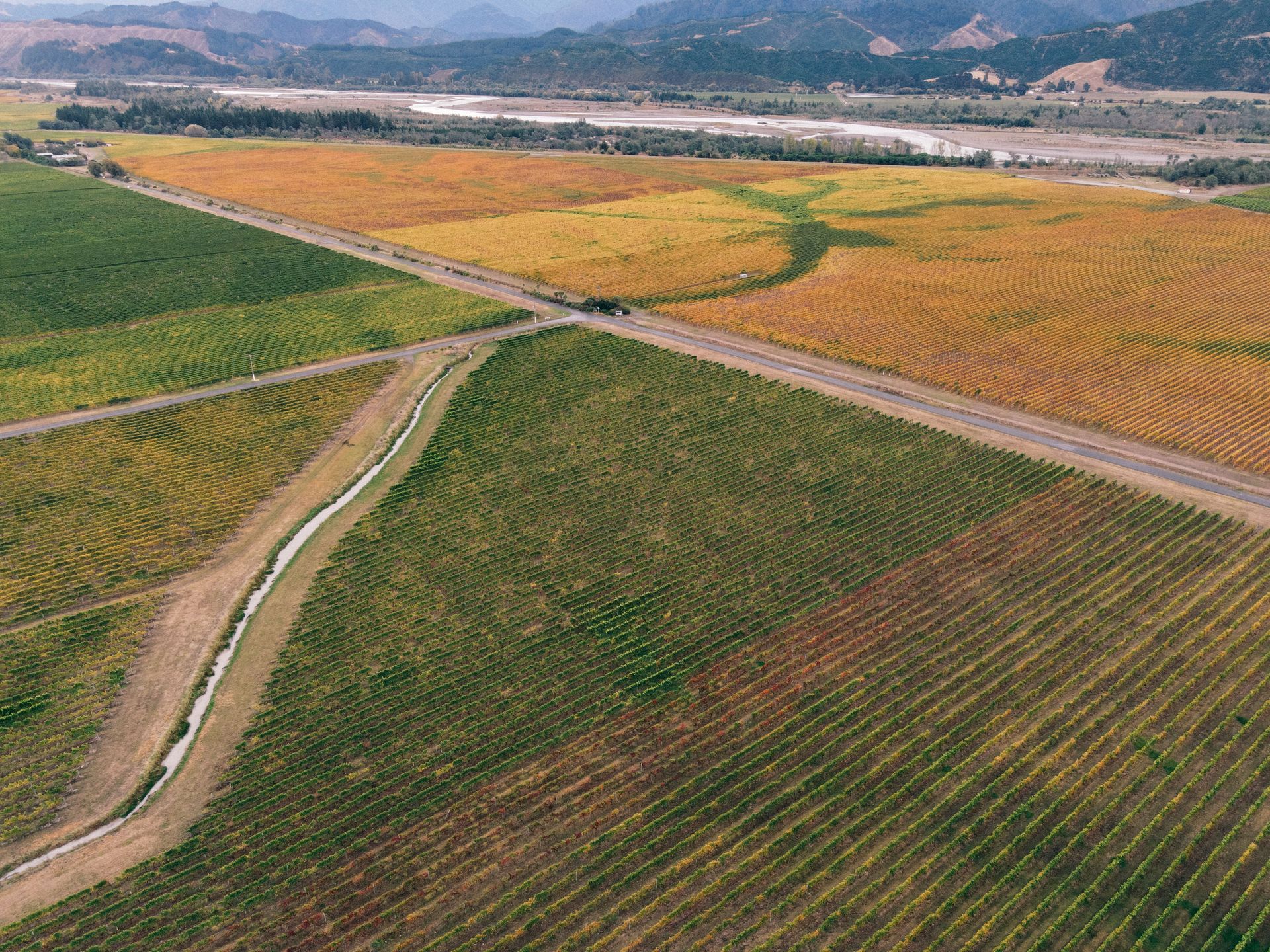
California Water Restrictions & Drip Irrigation: Why Your Home Vineyard Is the Responsible Choice
Southern California homeowners are conditioned to feel guilty about water use. But there is a category of outdoor landscape that uses far less water than a lawn, qualifies for preferred treatment under most drought restrictions, and can actually produce something valuable every fall. That landscape is a drip-irrigated vineyard — and the data makes a compelling case.
This article covers what every Southern California homeowner needs to know about California water restrictions, drip irrigation regulations, tiered water pricing, and the Sustainable Groundwater Management Act (SGMA) — and why replacing a hillside lawn with grapevines may be one of the most water-responsible decisions you can make.
How Much Water Does a Lawn Actually Use in Southern California?
Before we talk about vineyards, let's establish the baseline. The Association of California Water Agencies (ACWA) estimates that a standard 1,000-square-foot lawn requires roughly 35,000 gallons of water per year — and that homeowners routinely over-irrigate by as much as 60%, which can push actual consumption to 75,000 gallons or more per year on that same 1,000 square feet.
The EPA's WaterSense program estimates that landscape irrigation accounts for nearly one-third of all household water use nationally — a figure that climbs above 60% in dry climates like Southern California's. For a typical SoCal homeowner with 2,000–5,000 square feet of lawn, that translates to 70,000–375,000 gallons per year going into grass that produces nothing.
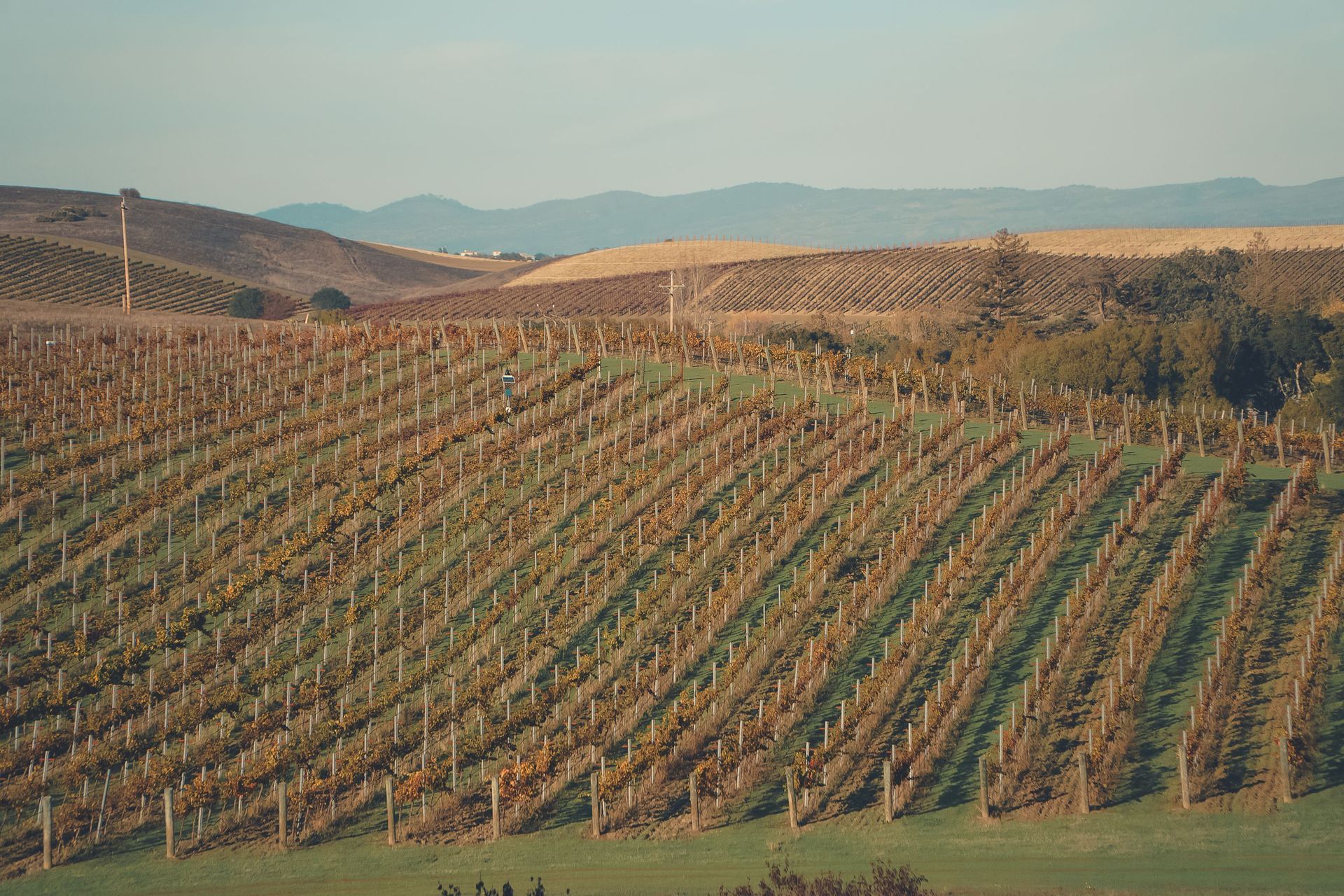
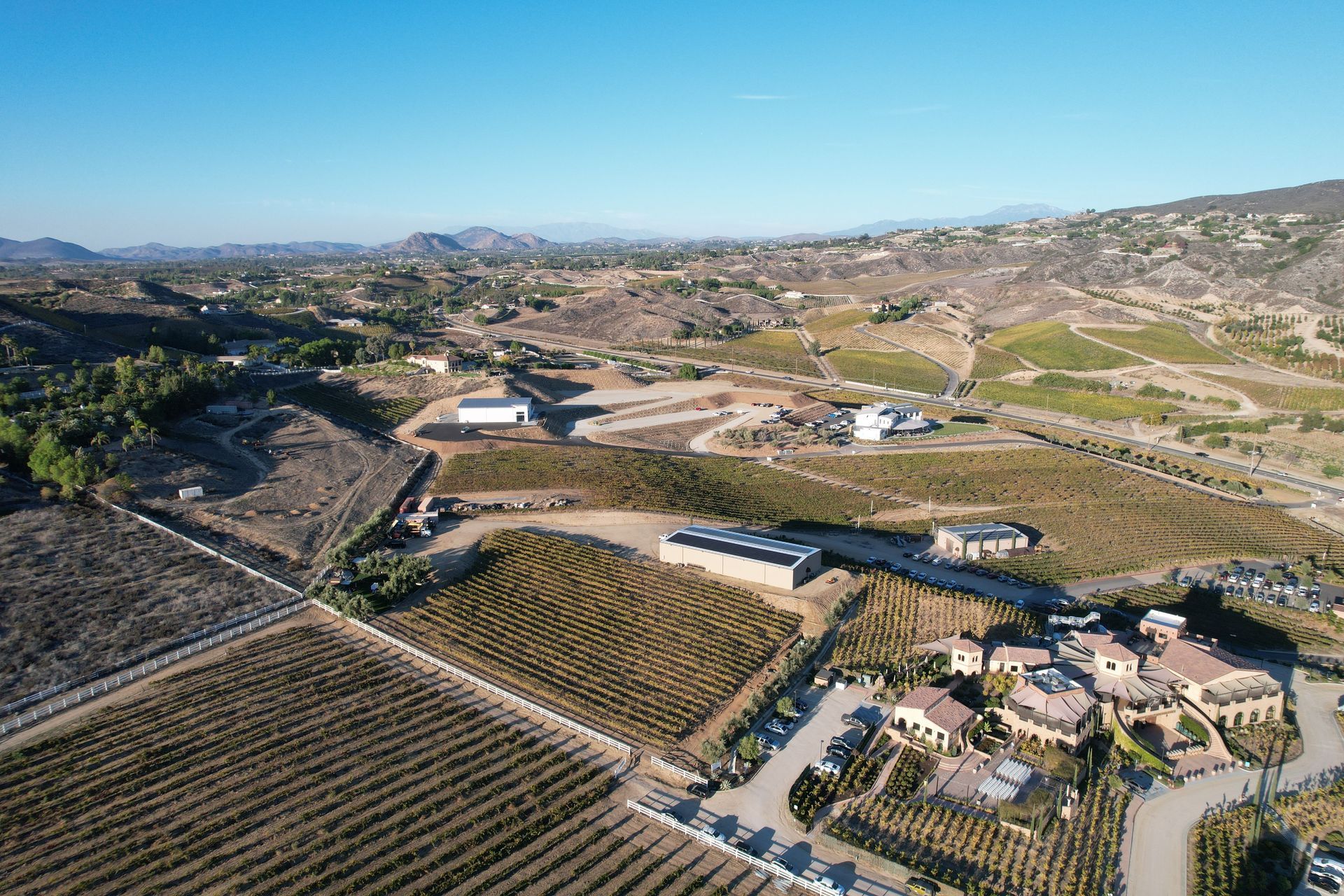
California is moving decisively away from this model. And for homeowners sitting on underutilized hillside terrain, there is a better option already growing in the hills above Temecula, Malibu, and Rancho Cucamonga.
How Much Water Do Grapevines Actually Need?
Grapevines are among the most drought-tolerant food-producing plants you can grow in Southern California's Mediterranean climate. According to UC Davis research on winegrape water management, a mature vine in a drip-irrigated vineyard uses approximately 10–15 gallons per vine per week during the cooler parts of the growing season, rising to 30–40 gallons per week only during peak heat events.
For context, a UC Davis cost study on Chardonnay winegrape production calculated applied water at 32 acre-inches per year — roughly 870,000 gallons across a full commercial acre. Spread across approximately 1,500 vines per acre, that works out to about 580 gallons per vine per year. For a residential hillside vineyard of 50–150 vines — a typical size for a Southern California estate property — that means annual water consumption in the range of 29,000–87,000 gallons, delivered precisely at the root zone through drip emitters with virtually zero evaporative or runoff loss.
Compare that to an equivalent lawn footprint consuming 75,000+ gallons per year on the same square footage — with 25–50% of that water lost to evaporation and overspray before it even reaches the soil. The math is not close.
Why Drip Irrigation Changes the Equation
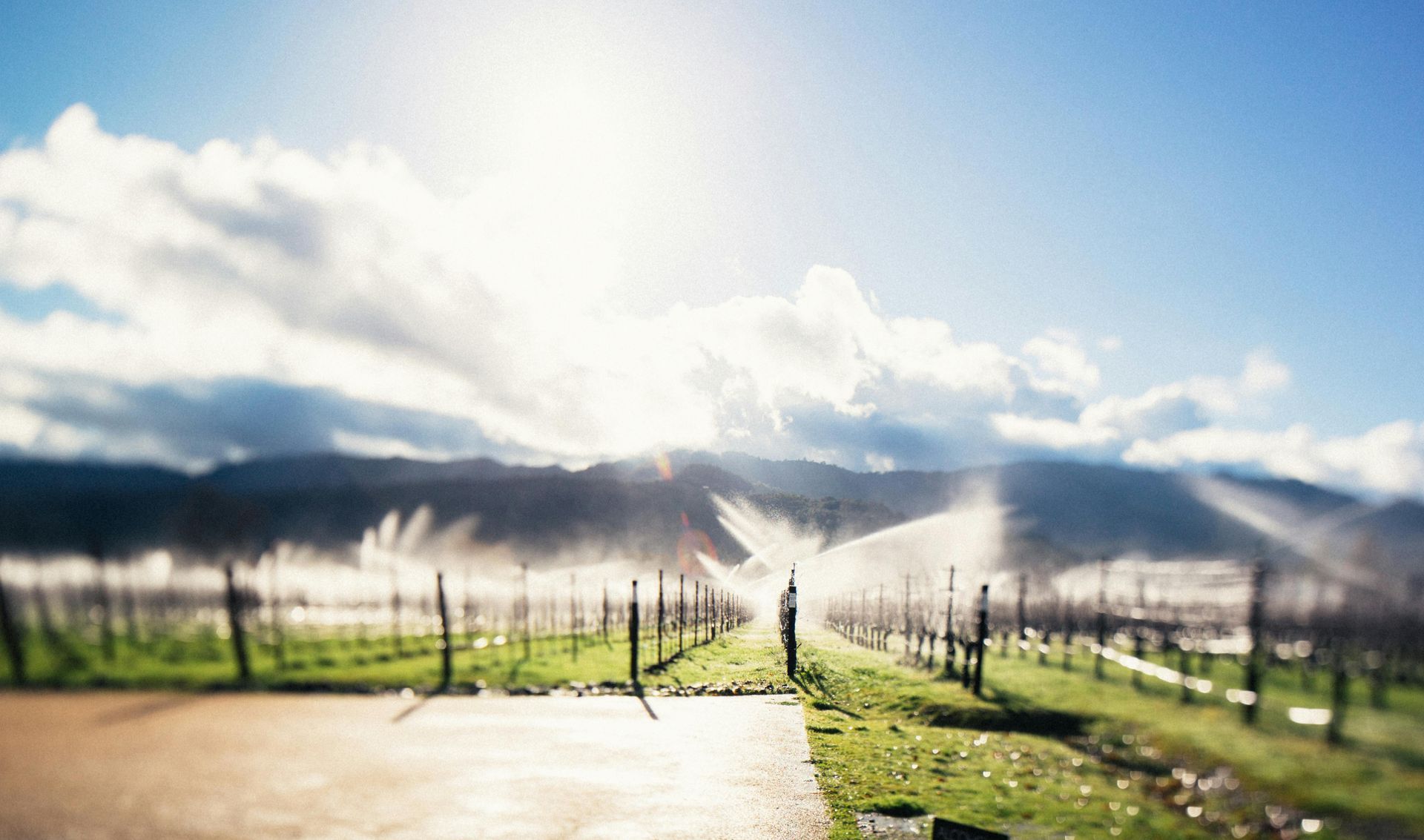
The efficiency difference between drip irrigation and conventional sprinkler systems is not marginal — it is fundamental. According to research cited by the California Native Plant Society and the University of California, drip irrigation operates at 95–99% efficiency, compared to only 50–75% efficiency for traditional overhead spray systems.
Grapevines are specifically suited to drip irrigation. The California Department of Food and Agriculture (CDFA) has published UC Cooperative Extension research showing drip-irrigated crops can achieve water savings of 37% over other delivery methods, along with improved yield. For vineyards, the efficiency case is even stronger because regulated deficit irrigation — deliberately limiting water during specific growth stages — is an accepted, quality-enhancing technique used by professional viticulturists throughout California. Vineyards don't just tolerate water reduction; they are often improved by it.
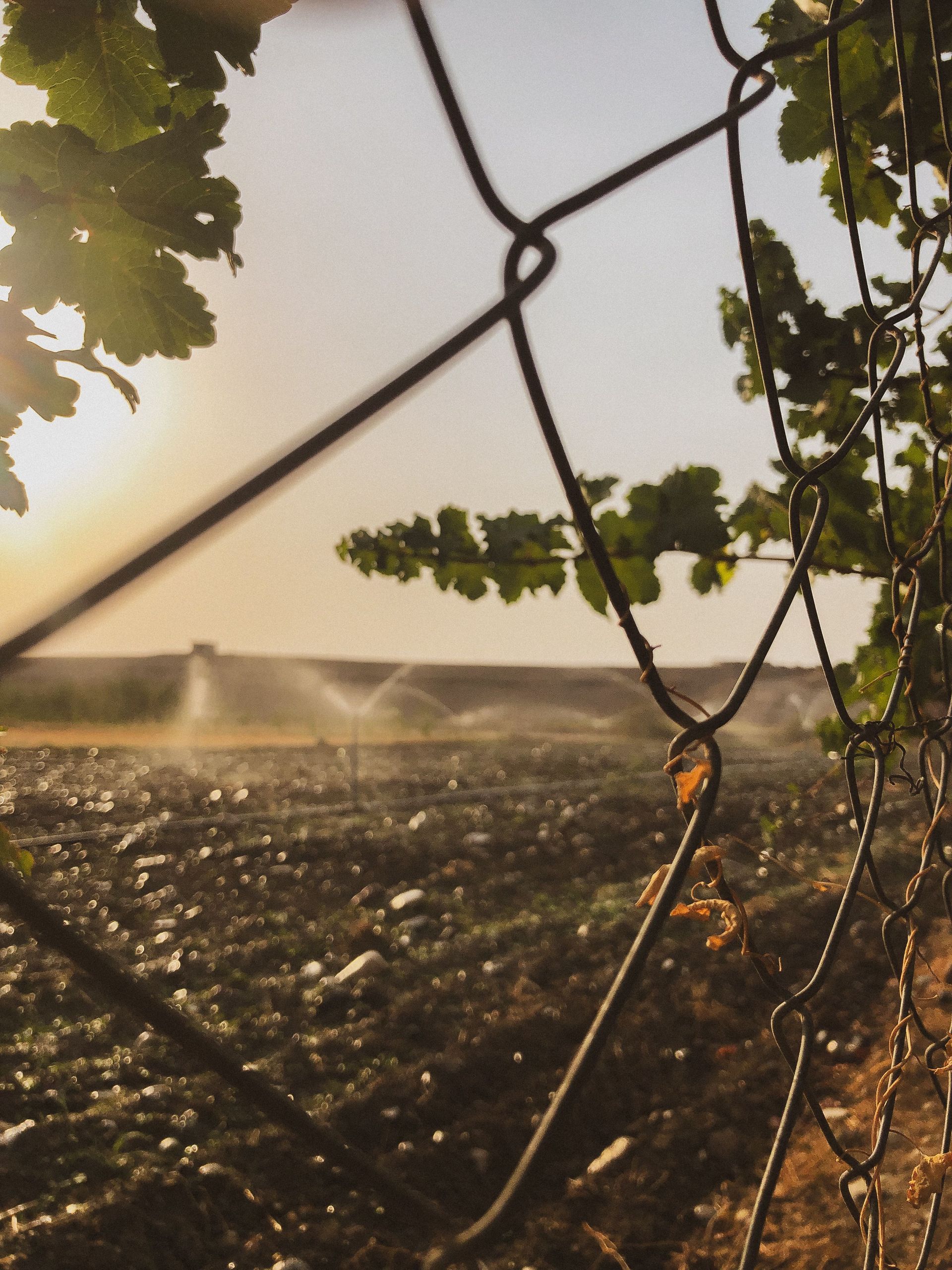
A professionally designed vineyard drip system uses pressure-compensating emitters rated at 0.5–1.0 gallons per hour, typically two per vine, timed to match vine growth stages throughout the season. From bud break through harvest, water is applied based on actual demand — not a fixed timer. That precision is simply not possible with spray irrigation.
California Water Restrictions: Where Does a Vineyard Stand?
As of June 5, 2024, the State Water Resources Control Board's statewide emergency water conservation regulations have expired. However, local water agencies retain the authority to implement and maintain their own conservation stages and restrictions, and many throughout Southern California continue to enforce tiered watering schedules.
The key regulatory distinction that matters for vineyard owners: during drought restrictions, food-producing plants receive preferential treatment over ornamental landscaping. The City of Los Angeles's Phase 3 drought ordinance explicitly stated that hand-watering and drip irrigation of a food source — defined as edible vegetation including fruits — is permitted any day of the week, before 9:00 a.m. or after 4:00 p.m. This is a direct carve-out from the two-day-per-week restrictions that apply to ornamental lawns.
The City of Arcadia similarly allows trees and perennial plants to be watered by drip irrigation on any day before 9:00 a.m., outside of the general watering schedule restrictions. In short: when drought restrictions tighten, grapevines get treated like the food-producing plants they are — because they are.
AB 1572 and the Coming Lawn Reckoning
In 2023, Governor Gavin Newsom signed Assembly Bill 1572, which phases in a statewide ban on the use of potable water to irrigate nonfunctional turf — grass that serves no recreational or community purpose — across commercial, institutional, and government properties. The ban applies to state and local government properties beginning January 1, 2027, and extends to all commercial and institutional properties by January 1, 2028.
AB 1572 does not currently mandate residential turf removal. But its trajectory is clear. California's water policy increasingly treats ornamental lawns as wasteful by default. The Metropolitan Water District of Southern California has doubled its turf replacement rebate to $7 per square foot in response to AB 1572. LADWP now offers commercial customers up to $9 per square foot for turf replacement as of September 2025. Southern California Water$mart offers residential customers $2–$3 per square foot for qualifying projects.
The state is actively paying property owners to remove grass. That is not a policy direction that reverses.
Tiered Water Pricing: The Hidden Cost of Keeping a Lawn
Most Southern California water agencies use tiered pricing structures, where the cost per gallon increases as consumption climbs into higher tiers. The intent is to reward conservation and penalize excess use. A residential lawn that consumes 70,000+ gallons per year pushes the household into higher pricing tiers during peak summer months — the exact period when most of that water is consumed.
A drip-irrigated vineyard delivering water at root level, precisely timed, and to food-producing plants reduces total outdoor water consumption significantly, pulling the household back down into lower-cost tiers. According to data cited by ACWA, combined water and sewer costs in California run approximately $5.76 per 1,000 gallons at base tier rates — and rise when upper tiers are triggered. High-consumption lawns routinely add $50–$200 to monthly water bills during summer months. A vineyard operating at a fraction of that volume simply does not generate the same billing penalty.
SGMA and Why Groundwater Is Only Getting More Regulated
California's Sustainable Groundwater Management Act (SGMA), signed into law in September 2014, established a statewide framework requiring local agencies to bring overdrafted groundwater basins into balance by 2042. Local Groundwater Sustainability Agencies (GSAs) are required to develop and implement sustainability plans that may include pumping limits and extraction fees. Groundwater supplies approximately 40% of California's water in a typical year — and as much as 60% during drought years.
Southern California's inland basins have been among the most heavily overdrafted in the state. What this means for homeowners is straightforward: water is not getting cheaper or easier to access. The long-term regulatory and supply trajectory points toward higher costs, reduced allocations, and increased scrutiny of outdoor water use. Landscapes that consume large volumes of water for purely decorative purposes are increasingly out of step with where California's water policy is heading.
A vineyard — productive, food-classified, drip-irrigated, and operating at a fraction of lawn water consumption — is positioned on the right side of that trajectory.
The Conservation Math: Replacing a SoCal Lawn With a Vineyard
A homeowner with a 3,000-square-foot underutilized hillside lawn currently consumes approximately 105,000–225,000 gallons per year on that area alone. Replacing that hillside with a 75-vine drip-irrigated vineyard reduces outdoor water consumption for that area to approximately 43,500 gallons per year — based on UC Davis commercial production data of roughly 580 gallons per vine annually. That is a water reduction of 60–80% on the same footprint.
And unlike a lawn, the vineyard produces something: estate-grown fruit, potential wine, agricultural tax classification, and property distinction that simply cannot be replicated with grass. The conservation argument and the value creation argument point in exactly the same direction.
Frequently Asked Questions
Are grapevines exempt from California drought water restrictions?
Grapevines are classified as a food source under most Southern California water agency drought ordinances, which typically allows drip irrigation of food-producing plants on any day of the week. This is a distinct advantage over ornamental landscaping during drought restrictions when spray irrigation may be limited to two days per week.
Is drip irrigation required for a home vineyard in California?
Drip irrigation is not legally mandated for residential vineyards in most jurisdictions, but it is the professional standard for estate vineyard installation in Southern California. Governor Newsom's 2015 Executive Order required newly constructed properties to use drip or microspray systems for outdoor irrigation. Drip systems also reduce evaporative loss to near zero and enable regulated deficit irrigation, which can improve fruit quality in wine grapes.
How does SGMA affect homeowners with residential vineyards?
SGMA primarily governs groundwater extraction by large-volume users, not residential potable water customers. However, SGMA's long-term effect is to tighten overall water supply and raise costs throughout Southern California. A drip-irrigated vineyard's low water footprint positions it well for a future of higher water costs and reduced allocations.
Will AB 1572 require me to remove my lawn?
As of 2025, AB 1572 does not require residential homeowners to remove lawns. It phases in a ban on nonfunctional turf irrigation for commercial, institutional, and government properties. Residential turf is not currently subject to the mandate, though significant rebate programs make voluntary removal financially attractive.
How much water does a drip-irrigated home vineyard use compared to a lawn?
Based on UC Davis commercial production data and ACWA lawn consumption estimates, replacing a hillside lawn with a drip-irrigated vineyard typically reduces water use on that footprint by 60–80%.
Southern California's Water Policy Is Moving Toward Vineyards
The confluence of AB 1572's turf bans, SGMA's groundwater restrictions, tiered water pricing, and drought ordinances that protect food-producing plants is not a coincidence. California's water policy is systematically de-incentivizing ornamental lawns and creating a framework that increasingly favors productive, efficient, food-producing landscapes.
A drip-irrigated home vineyard checks every box that California's water regulations are designed to reward. It uses dramatically less water than the landscape it replaces. It delivers that water with near-total efficiency at the root zone. It produces edible fruit, earning preferential treatment under drought restrictions. And it can be managed with evapotranspiration-informed scheduling that ties irrigation directly to real-world climate demand.
If you are a Southern California homeowner reconsidering what your hillside should look like — and what your relationship with water conservation should be — a residential vineyard may be the most defensible and productive answer available.
Ready to replace your lawn with something that actually produces? At MyHomeVineyard.com, we design and install complete drip-irrigated vineyard systems on Southern California residential properties, from initial soil assessment through vine installation, irrigation engineering, and ongoing management. Schedule a complimentary property assessment to find out if your hillside qualifies. You can also learn more about our vineyard installation process and year-round vineyard management services.