Heat Wave Survival Guide for Southern California Home Vineyards

MyHomeVineyard.com • July 16, 2026

Share this article

The weekend forecast lands on Wednesday: 107°F Saturday, 104° Sunday, 100° Monday. For anyone managing a home vineyard in Southern California, those three days are not a weather event — they are a crop-protection event. Berry shrivel, sunburn browning, and rapid acid loss can happen in a single afternoon. The difference between a salvaged harvest and a damaged one often comes down to decisions made 48 to 72 hours before the heat arrives.

This guide covers what SoCal estate owners need to know before, during, and after a summer heat wave: the irrigation strategy that actually works, what to do and not do with your canopy, how to reduce sunburn with kaolin clay, and the post-event steps that protect your harvest. All recommendations are grounded in current viticulture research from UC ANR, Wine Australia, and the American Journal of Enology and Viticulture.

Why Southern California Heat Waves Hit Vineyards Differently

A heat wave in inland Southern California is not the same as a hot day in Napa. In the Temecula Valley, Ramona, and the San Diego foothills, low relative humidity accelerates water vapor loss from vine leaves at exactly the moment transpiration is already maxed out. The result: canopy temperatures that regularly exceed ambient air by 15 to 20°F. According to UC ANR viticulture research, during California's June 21–July 27, 2024 heat events, vine canopy temperatures exceeded 100°F for extended periods — even in blocks where air temperatures peaked in the low 90s.

The physiology matters. Photosynthesis is optimal between 77°F and 86°F. Above 95°F, net carbon gain drops sharply. Above 105°F, cellular damage begins accumulating in leaves and fruit. Exposed berry surface temperatures in direct sun run 20–30°F above air temperature — meaning a 105°F afternoon pushes sun-facing berry skin toward 130°F, well into tissue-damage territory. This is why vineyard management through the June–July window is the most consequential work of the growing year.

Your choice of wine grape varieties also affects heat vulnerability. Thick-skinned loose-cluster varieties like Mourvèdre, Grenache, and Tempranillo tolerate heat better than tight-cluster thin-skinned varieties like Pinot Noir or Chardonnay. But no variety escapes a sustained three-day 105°F event without active management.

The Pre-Heat-Wave Irrigation Window: Your Most Important Tool

If there is one rule in heat wave management, it is this: irrigate before the heat arrives, not in response to it. Research from Wine Australia's vineyard heat management program is unambiguous — irrigating vines to field capacity 48 to 72 hours before a forecast heat event is the single most effective intervention available to growers. A vine with fully charged soil moisture can sustain transpirational cooling through the peak of a three-day event. A vine starting the event in deficit cannot.

For SoCal home vineyard owners on drip irrigation, this means running your system to saturation — not a standard irrigation cycle, but a full soil recharge. Depending on soil type and vine age, this may require 12 to 24 hours of run time across your zones. Sandy soils in the San Diego foothills drain quickly and may need a second pass. Clay-loam soils in Temecula and Ramona hold moisture longer. The goal is field capacity at the beginning of the heat event, not as a recovery response to it.

One important caution from California SJV growing region research: avoid severe water deficit in the weeks leading up to a forecast heat event. Vines under prolonged stress entering a heat wave face compounded damage — their primary cooling mechanism (transpiration) is already impaired before the event begins. If your block uses a regulated deficit irrigation protocol, review the timing with your viticulturist relative to any extended heat in the forecast.

Overnight overhead sprinkler irrigation, where available, can also provide evaporative cooling during early morning hours. Wine Australia identifies this as a secondary strategy when drip systems alone may be insufficient. Most SoCal home vineyard installations are drip-only, so pre-charging is the primary lever.

Canopy Management Before and During the Heat

The comprehensive approach to canopy management in June and July covers basal leaf removal, shoot positioning, and hedging — but heat wave timing adds a critical constraint: do not defoliate before a forecast heat event. The basal leaves on the shoot are your fruit's primary sunscreen. UC ANR research confirms that leaf removal before or during a heat event exposes berries to direct solar radiation and dramatically increases sunburn browning and berry shrivel rates.

Row orientation affects afternoon exposure, though you cannot change it mid-season. SJV viticulture research identifies north-south row orientation as providing less afternoon shade on the western berry face — the side most exposed to the hottest part of the day. If your rows run north-south and you are heading into a multi-day event, maintaining maximum canopy cover on the western exposure is the practical response. East-west rows naturally provide more afternoon shade to the fruit zone.

Shoot positioning during the event should prioritize shade over airflow. For two or three days, managing disease pressure from reduced airflow is a secondary concern. Powdery mildew management can resume once temperatures normalize. Sacrificing some airflow for the duration of a heat wave is a reasonable trade-off to protect the crop.

Protecting Grapes: Sunburn Prevention and Berry Shrivel

Two distinct types of heat damage appear in California vineyards: sunburn browning (a surface tissue injury from UV and infrared radiation) and berry shrivel (a water-loss and tissue-collapse event driven by heat combined with water stress). Both are largely preventable with the right preparation, but they require different interventions and have different consequences for your harvest.

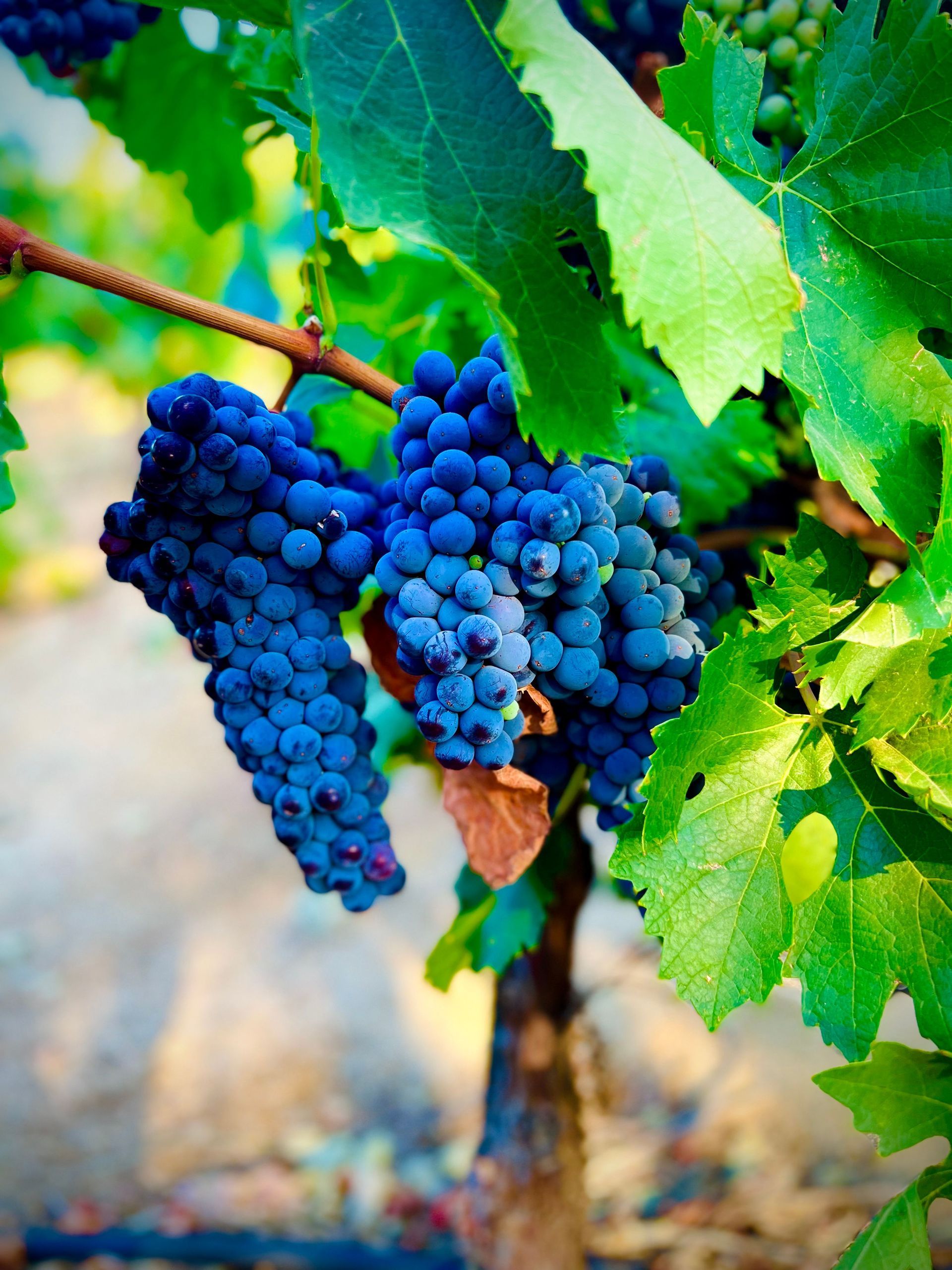
For sunburn prevention, the most well-documented intervention in the research literature is kaolin clay. A study published in HortTechnology (American Society for Horticultural Science) found that kaolin clay applications reduced berry shrivel in Tempranillo by 85%, and reduced sunburn browning in Mourvèdre and Syrah by 23–34%. Kaolin works as a reflective particle film — it reduces the surface temperature of exposed berries by reflecting solar radiation before it reaches the tissue.

Application timing is critical: kaolin must go on before the heat event, not after damage appears. Two to three applications beginning 10 to 14 days before forecast peak heat are more effective than a single late treatment. The material washes off with water — if overhead irrigation is used during the event, reapplication is needed.

Berry shrivel post-veraison is more severe than simple water loss. UC ANR notes that intense heat can impair the berry's ability to import water even after temperatures normalize, making recovery from shrivel difficult. The practical implication: preventing shrivel through pre-event irrigation and canopy protection is far more effective than attempting to reverse it after the fact. Once significant shrivel is visible, adjusting harvest timing to bring the block in earlier is typically the right call.

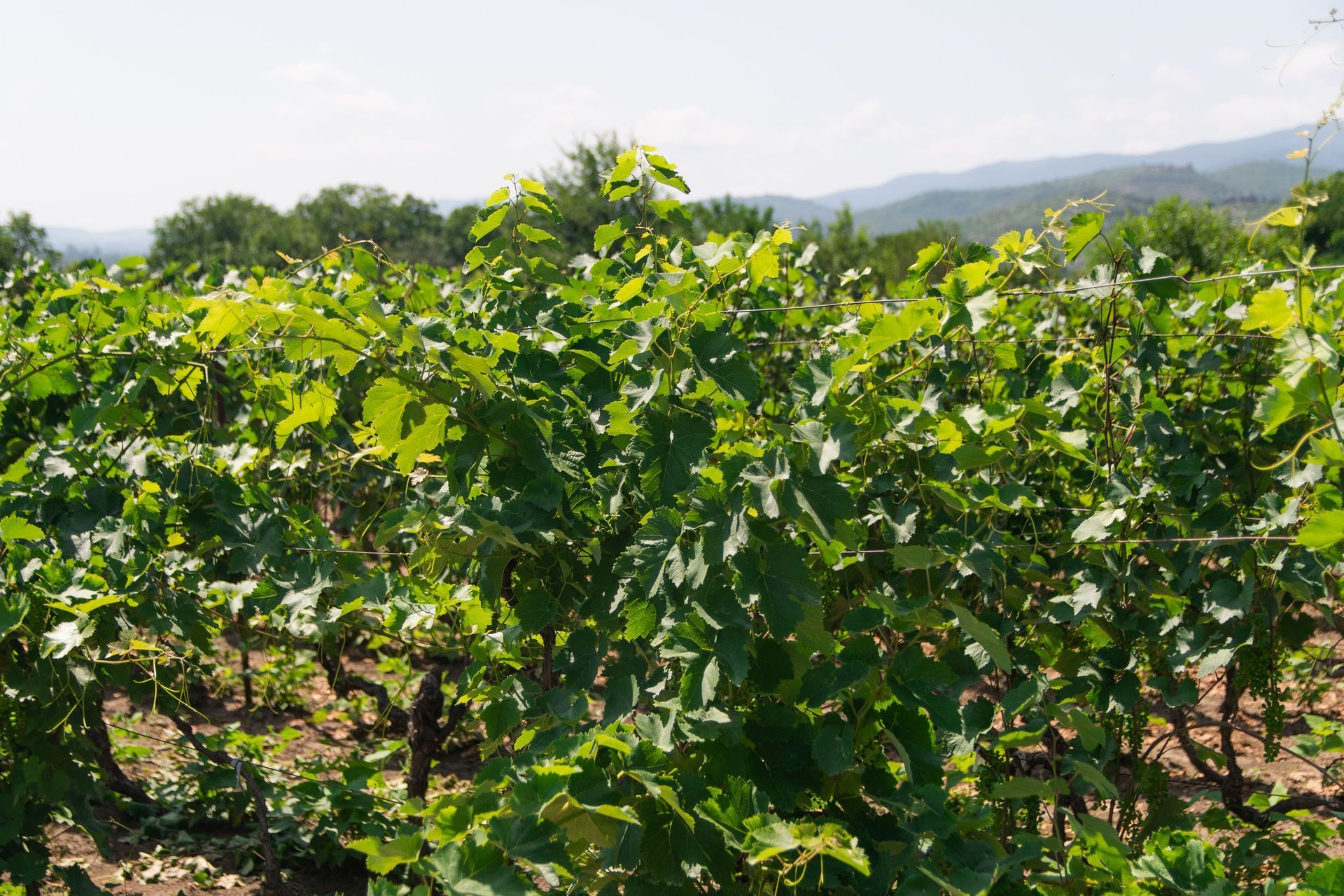
Lush green vineyard under bright sunlight with distant hills in the background

Monitoring Vine Stress During a Heat Event

Real-time monitoring during a multi-day heat event lets you make informed decisions rather than guessing. The most reliable physiological indicator is stem water potential (SWP), measured with a pressure chamber at predawn or midday. A 2024 study in the American Journal of Enology and Viticulture found that 48% of Southern California commercial growers now regularly collect SWP data — a significant increase driven by water scarcity and heat risk awareness in the region.

For home vineyard owners, a basic pressure chamber is a worthwhile investment if you are managing more than a half-acre of vines. Predawn SWP readings more negative than −6 bars in July (post-veraison) indicate residual water stress entering the day. Midday readings more negative than −14 to −16 bars during a heat event indicate the vine's cooling capacity is near its limit.

Visual stress signs to watch for include leaf rolling (the vine reducing its exposed surface area), shoot tip wilting (the most sensitive tissue shows stress first), and berry softening without normal ripening indicators. These are early warnings, not post-mortem observations. A vineyard consultation scheduled pre-season helps you establish your site's specific water stress thresholds — knowing your numbers before a heat event is far more useful than diagnosing during one.

Post-Heat-Wave Recovery: The 48 Hours After

Once temperatures normalize, a systematic block assessment is the first priority. Walk each row and document: percentage of sunburn browning per variety and row position, visible berry shrivel, shoot tip dieback, and overall foliage condition. This damage map informs harvest timing decisions — blocks with significant shrivel may need to come in earlier than planned to capture quality before the damage compounds further.

Resume normal irrigation scheduling within 24 to 48 hours of the heat event ending. The instinct to ease off once temperatures drop is counterproductive — your vines depleted significant soil moisture reserves during the event and need recharge before the next routine cycle. Return to your normal regulated deficit protocol after recharging.

Resist the urge to immediately strip damaged tissue. Sunburned leaves continue to photosynthesize and shade remaining fruit. Removing them prematurely reduces recovery capacity and may re-expose previously shaded berries to the next heat event. For blocks where fruit damage is significant, begin early conversations about your private winemaking approach — heat-stressed fruit can still produce excellent wine with the right processing decisions, but those decisions need to be made before harvest, not after the fruit reaches the crush pad.

How MyHomeVineyard.com Supports SoCal Estate Owners Through Summer

Managing a home vineyard in Southern California means working with a climate that is genuinely different from most of what the viticulture textbooks describe. The research cited in this guide — UC ANR, Wine Australia, ASHS, and the AJEV — is directly applicable to SoCal conditions, but translating it to your specific parcel, soils, microclimate, and variety selection takes local hands-on expertise that no publication fully substitutes.

MyHomeVineyard.com has spent 13 years managing estate vineyards across Southern California — Temecula, Ramona, the San Diego foothills, the Santa Barbara coast. Every block has its own heat signature and its own quirks. Our home vineyard installation process includes site analysis and row-orientation planning designed for SoCal's specific summer exposure profile — getting these right at planting is the most durable heat protection you can build.

Questions about your block this season? Contact MyHomeVineyard.com — we are in the vineyards every week and can give you a real read on what's happening and what it means for your harvest.

Frequently Asked Questions: Heat Waves and SoCal Home Vineyards

At what temperature do grapevines begin to suffer damage?
Photosynthesis drops sharply above 95°F, and cellular damage begins above 105°F at the canopy level. Because canopy temperatures can run 15–20°F hotter than ambient air in low-humidity conditions, an air temperature forecast of 95°F may mean 110°F+ inside the vine canopy. Exposed berry skin in direct sun adds another 20–30°F above air temperature.

Should I irrigate during a heat wave or wait until it passes?
Pre-event irrigation — to field capacity, 48–72 hours before peak heat — is the most effective intervention. If a heat event catches you with dry soil, run your drip system during the event to support transpirational cooling, but reactive mid-event irrigation is far less effective than a pre-charged soil profile.

Can shade cloth protect home vineyard fruit from heat damage?
Yes. Shade cloth rated 30–40% light reduction over the fruit zone is effective and increasingly common in SoCal estate vineyards. For smaller blocks, installation before a forecast event is practical. For larger parcels, kaolin clay application is more scalable. Both can be combined for maximum protection in a severe multi-day event.

I already see sunburned berries — what should I do?
Document the extent of damage per row and variety. Do not remove sunburned leaves — they continue to photosynthesize and provide shade to remaining fruit. Apply kaolin clay immediately if additional heat events are in the forecast. Adjust your harvest timeline for affected blocks and plan your winemaking approach for heat-stressed fruit — early harvest and cool, fast processing are typically the right moves.

Recent Posts

By MyHomeVineyard.com July 9, 2026
Pierce's Disease costs California more than $100 million per year and wiped out 30% of Temecula's vineyards in just two years. Learn the four diagnostic symptoms, the critical summer risk window, and how licensed vineyard management keeps your SoCal home vineyard effectively disease-free. From MyHomeVineyard.com — 13 years of SoCal estate vineyard expertise.
By MyHomeVineyard.com July 2, 2026
Veraison in Southern California home vineyards typically begins in late July — learn what to watch for by variety, how to adjust irrigation, and when to act on bird protection. Expert guidance from MyHomeVineyard.com — 13 years of SoCal estate vineyard experience.
By MyHomeVineyard.com June 23, 2026
Planning a home vineyard in Southern California? Discover which wine grape varieties actually thrive in SoCal's inland heat zones — and why Pierce's disease pressure changes the selection entirely. 13 years of SoCal estate vineyard expertise from MyHomeVineyard.com.
Close-up of green grapevine leaves on a trellis in a Southern California estate vineyard
By MyHomeVineyard.com June 23, 2026
Powdery mildew (Erysiphe necator) is the leading disease threat to SoCal home vineyards — and by the time you see white fuzz, the damage is done. Learn the UC Davis Risk Index, spray timing protocols, and canopy practices that protect your harvest. MyHomeVineyard.com — 13 years of SoCal estate vineyard expertise.
By MyHomeVineyard.com June 23, 2026
Home vineyard canopy management in Southern California requires a different playbook than cooler regions. June is your window for lateral removal, shoot positioning, and crop thinning before veraison — wrong timing risks sunburned clusters. MyHomeVineyard.com — 13 years of SoCal estate vineyard expertise. Get a custom management plan.
By MyHomeVineyard.com June 19, 2026
Peer-reviewed research shows ultrasonication can accelerate wine oak aging 3-4x and improve sensory scores by 25%. Here's what the science says and how home winemakers can use it.
Residential vineyard rows on a Southern California hillside with trellis and drip irrigation
By MyHomeVineyard.com June 17, 2026
Planning a home vineyard in Southern California? This complete cost guide covers installation, annual management, and private winemaking — with real data from UC Cooperative Extension studies and 13 years of SoCal estate vineyard experience.
A dormant vineyard with bare grapevines on trellises, set against a backdrop of rolling green hills under a bright sky.
By MyHomeVineyard.com April 14, 2026
Learn about the breakthrough XylPhi-PD bacteriophage treatment that's saving infected vines in Southern California. Includes real field trial results, application methods, and expert guidance.
Vine rows in a sunlit vineyard set against a mountain backdrop under a clear blue sky.
By MyHomeVineyard.com March 31, 2026
Powdery mildew is the #1 threat to SoCal home vineyards. Learn what homeowners can legally spray in California, what requires a license, and why professional management simplifies compliance.
By MyHomeVineyard.com March 27, 2026
Want to sell wine from your Southern California home vineyard? Here is exactly what federal law allows, what California's ABC Type 02 license requires, and the realistic path forward.
Show More