Veraison in Southern California Home Vineyards: What to Watch For and What to Do
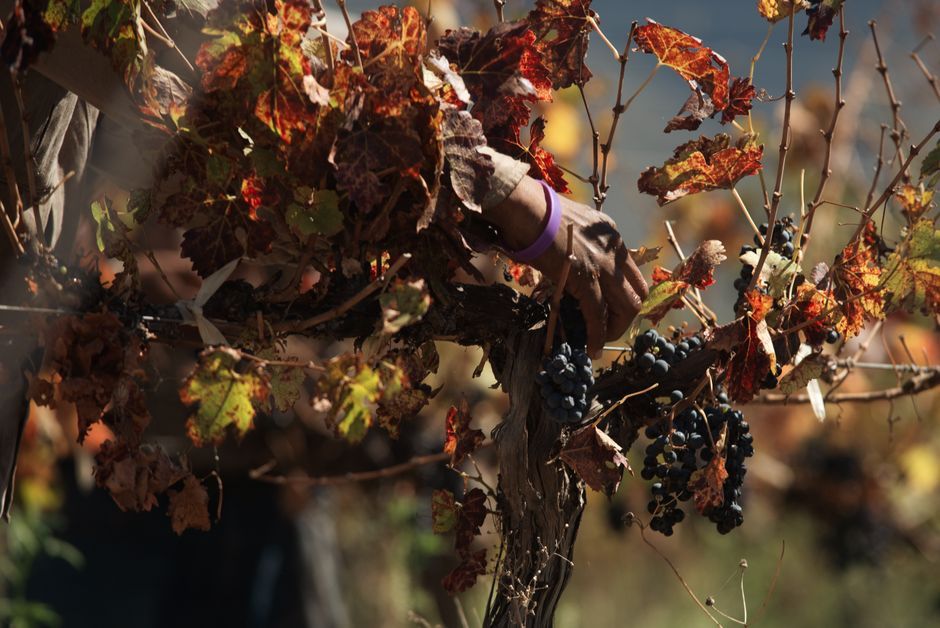
If you walked your vineyard this morning and noticed clusters starting to show color, you're not imagining things — veraison may have already begun. For home vineyard owners across Southern California's inland valleys, this color change is one of the most exciting moments of the growing year. It's also one of the most demanding. What you do — and don't do — in the weeks between veraison and harvest will define the quality of your eventual wine.
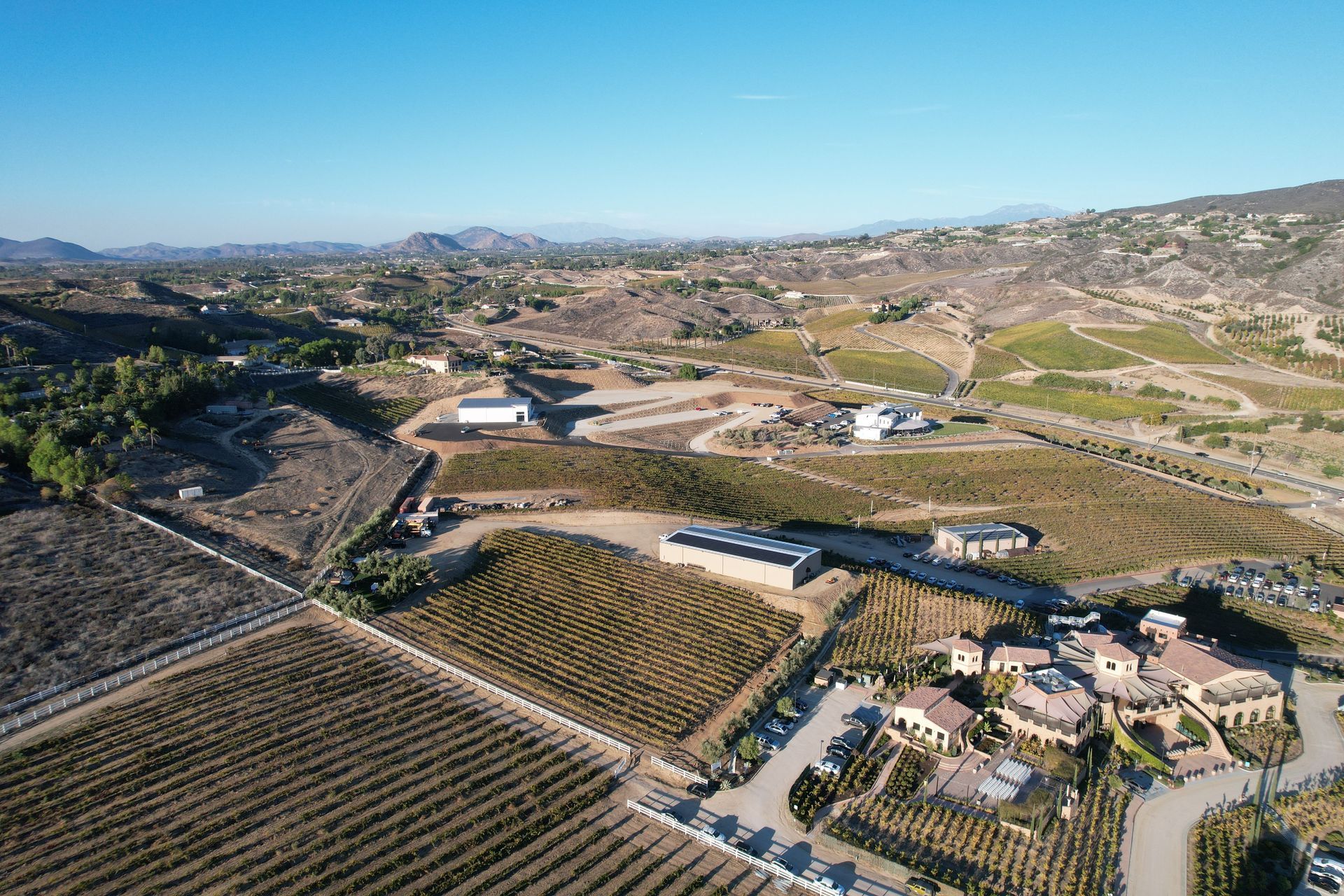
This guide is written specifically for the SoCal growing environment: our inland heat, our variety mix, and the unique pressures that come with managing a home vineyard in San Bernardino, Riverside, and Orange counties. Here's what veraison actually is, when to expect it, and exactly how to manage your vineyard through this critical phase.
What Is Veraison?
Veraison (pronounced ver-RAY-zon) is the point in the grape growing cycle when berries begin to ripen. Technically, it marks the transition from the lag phase — a period of little visible change — into the active ripening stage, when the vine shifts its energy from vegetative growth into fruit maturation.
According to Texas A&M's viticulture program, veraison "typically refers to a population of berries in a cluster, shoot, vine, row, block, or vineyard where 50% of the berries have changed color." ( Aggie Horticulture, Texas A&M.) That's the practical benchmark to watch for. You won't see overnight transformation — veraison is a process, not a moment.
During this phase, several things happen simultaneously inside the berry: sugar levels begin to climb, acidity starts to fall, the skins soften, and — in red and black varieties — anthocyanins flood in to produce the color change. The vine also redirects water and nutrients away from new shoot growth and toward the developing fruit, which has major implications for how you manage irrigation and canopy from this point forward.
When Does Veraison Happen in Southern California?
In the Sierra Foothills, winemakers report that "veraison occurs between mid-July and early August." ( El Dorado Wines.) Southern California's inland zones — the Cucamonga Valley, the Temecula growing area, and the higher-elevation sites in the San Gabriel and San Bernardino ranges — track a similar window, though our warmer summer temperatures can push some early-ripening varieties to begin showing color by mid-July in a warm year.
Your specific timeline depends on three factors: the variety you're growing, your elevation and microclimate, and the weather leading up to bloom. In a year with a warm spring, veraison can arrive one to two weeks earlier than average. A cooler, cloudier spring delays it. Use regional benchmarks as a rough guide, but watch your own vines — your hillside microclimate may run a week ahead or behind your neighbor's.
The transition is not instantaneous. As the team at Veritas Vineyard notes, "veraison takes two to three weeks to complete" — and in some varieties like Cabernet Franc, "the berries change color at different times in the same bunch." ( Veritas Vineyard and Winery.) Uneven coloring within clusters early in the process is completely normal. Your job during this period is to track progress, not panic at variability.
What to Look for by Variety
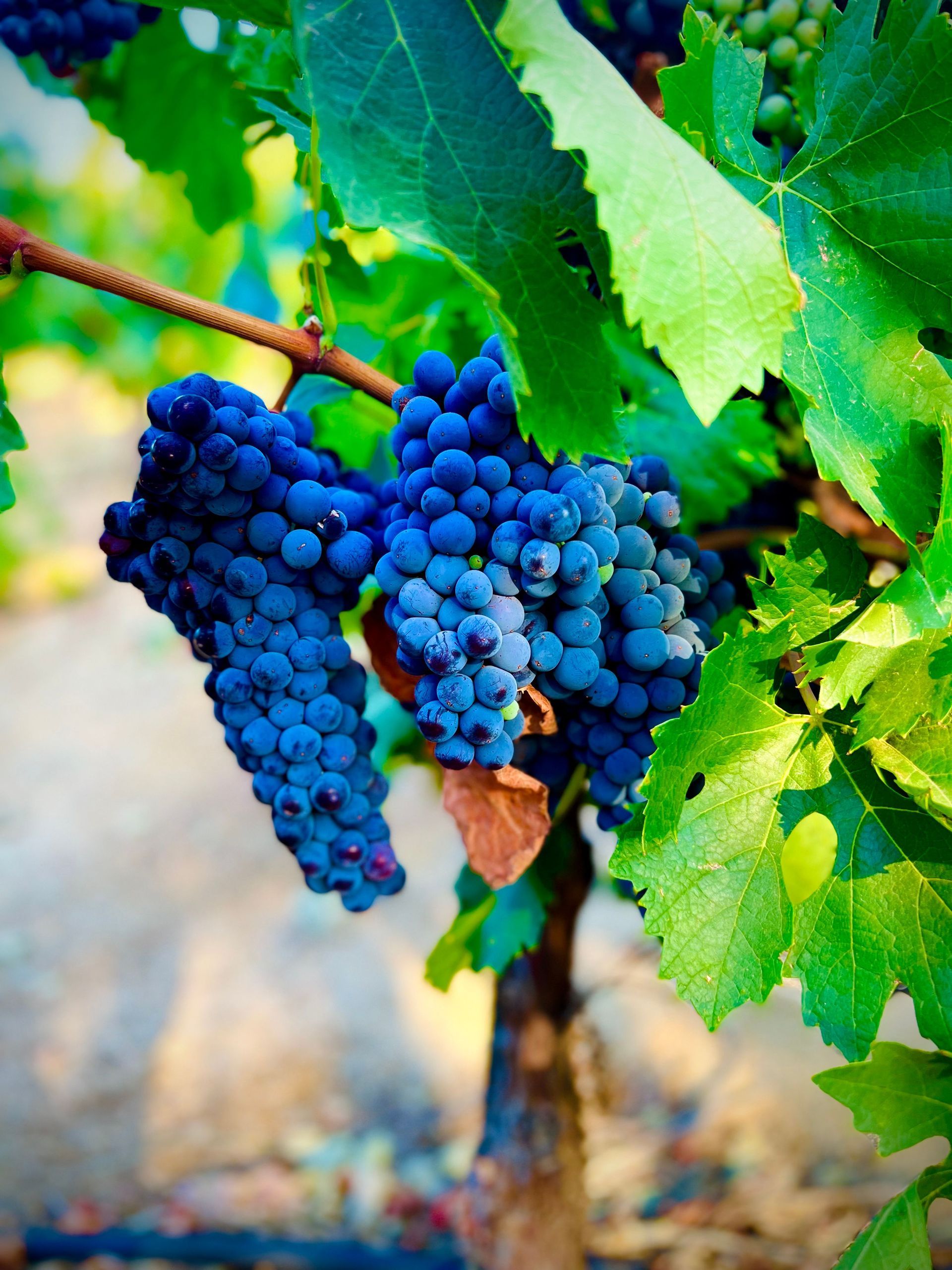
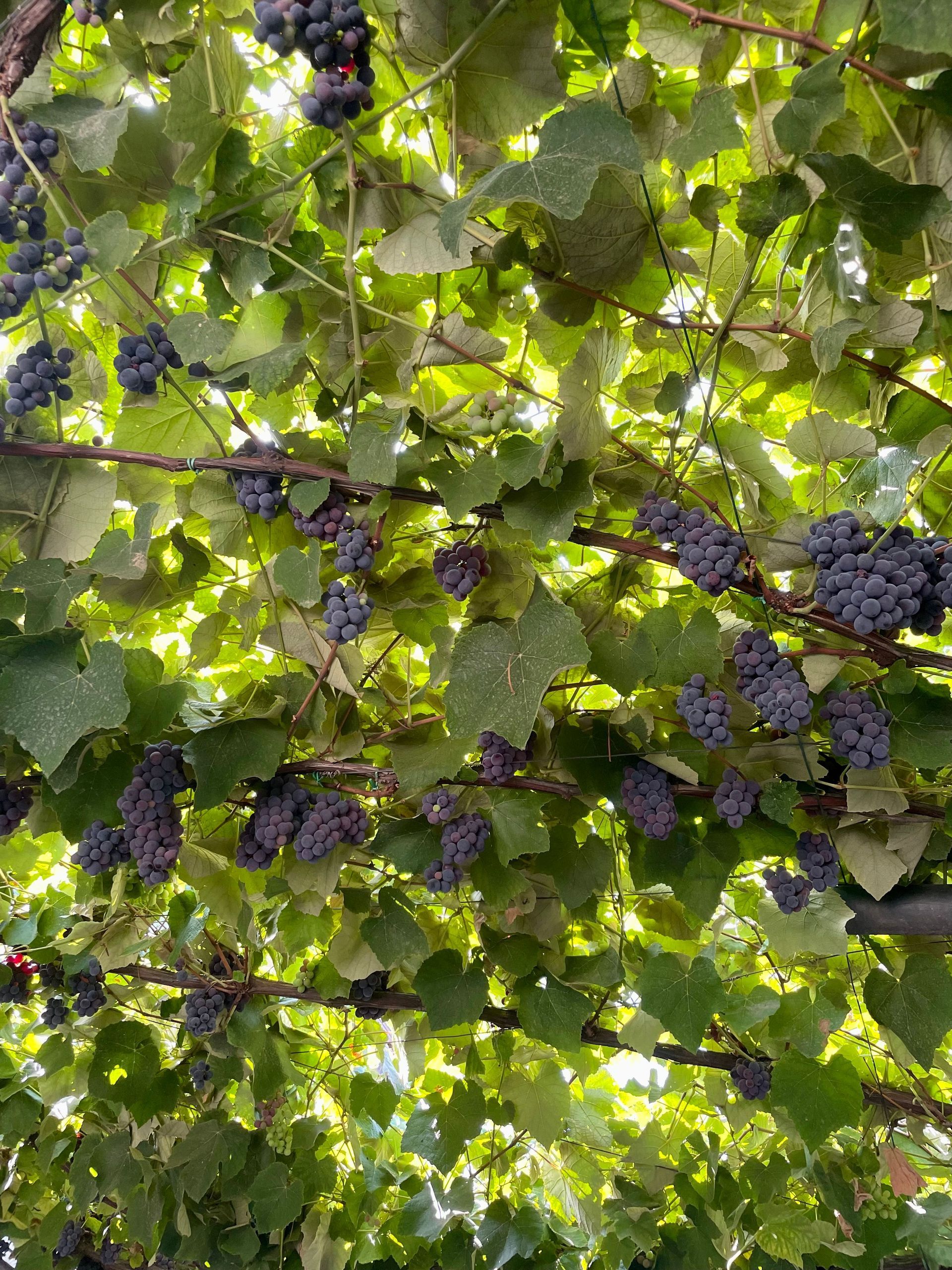
The visual cue differs by what you're growing. Red and black varieties — Zinfandel, Syrah, Grenache, Cabernet Sauvignon, Merlot, Petite Sirah — shift from hard green berries to softening clusters with visible purple, blue, or red pigmentation. The color usually appears unevenly at first, with individual berries in a cluster changing before their neighbors.
White and golden varieties — Chardonnay, Viognier, Muscat, Grenache Blanc — don't go purple. Instead, you're watching the berries shift from opaque, waxy green to a translucent, golden-yellow tone, with skins that become visibly thinner and more pliant. This can be subtle, especially early in veraison, so handle clusters gently and look for textural softening as much as any color change.
If you're growing more than one variety — which is common across SoCal estate plantings — expect each to hit veraison on a different schedule. Our guide to wine grape varieties for Southern California home vineyards covers variety-specific ripening timelines in depth. Early-ripening Grenache may begin coloring weeks before late-ripening Cabernet Sauvignon planted in the same yard. Monitoring and management decisions should stay variety-specific rather than treating the whole site as one block.
How to Monitor Berry Development After Veraison
Once veraison begins, visual inspections need to become routine. Walk every row and check multiple clusters per vine — don't just eyeball the outer-facing fruit that's easy to see. You're tracking the percentage of berries that have turned, the uniformity of color within clusters, and any early signs of shriveling, cracking, or disease pressure.
After full veraison, begin formal berry sampling to track ripeness. Texas A&M's viticulture program recommends that "berry samples should be collected every 7-10 days, 3-5 weeks prior to harvest. Sampling frequency may need to increase to every 2-3 days in the 10-day period leading up to the predicted harvest date." A 200-berry sample gathered randomly from across your blocks gives a statistically sound picture of where your fruit stands. ( Aggie Horticulture, Texas A&M.)
At the home vineyard scale, Brix readings every 7-10 days tell you whether your fruit is on a normal ripening trajectory. You'll also want to taste — the palate impression of seeds, skins, and pulp often tells you things a refractometer can't. If you'd prefer to leave the monitoring and tracking to experienced hands, our vineyard management service includes regular fruit monitoring through the full veraison-to-harvest window.
Irrigation Management at Veraison: The Critical Shift
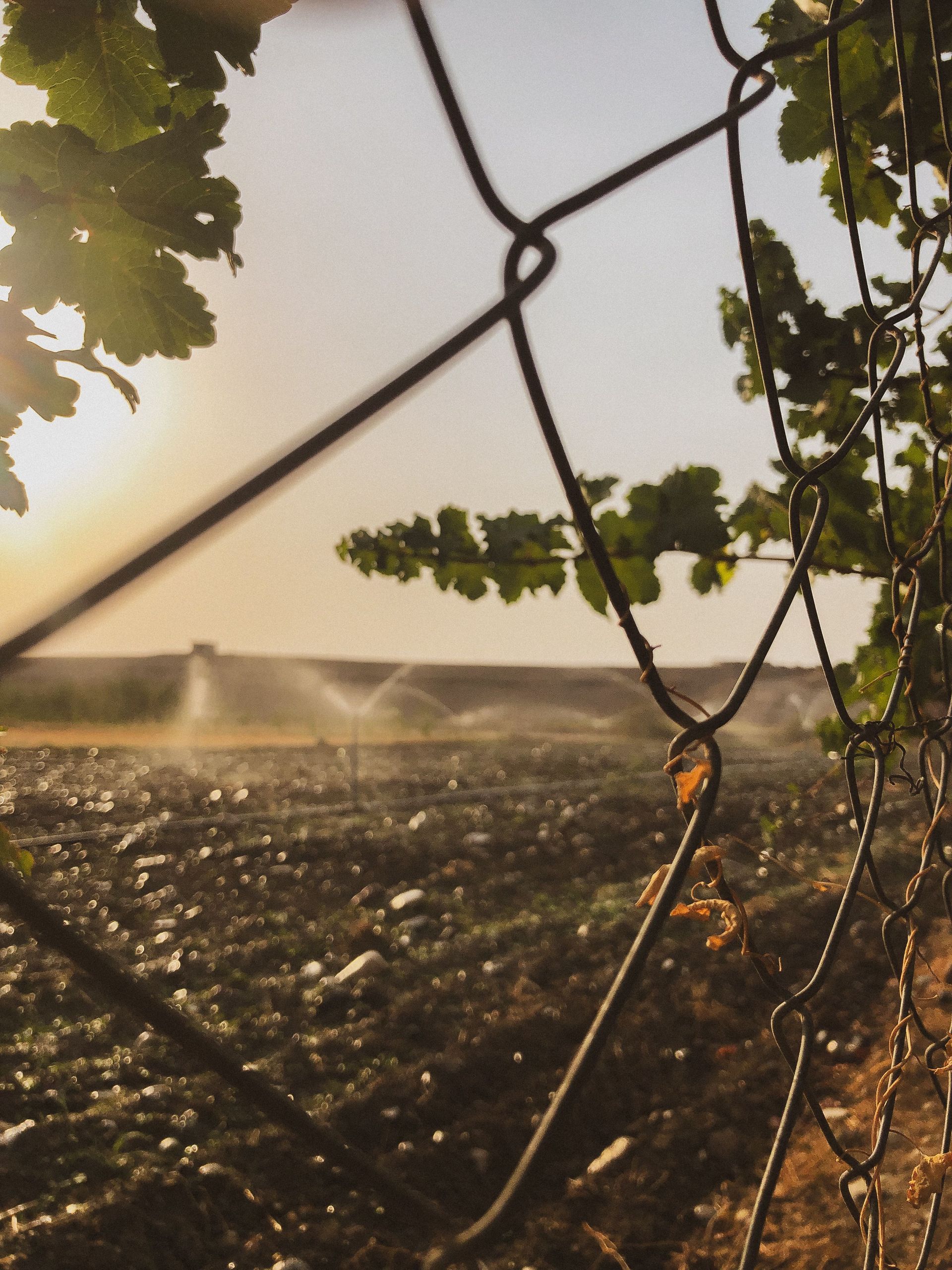
One of the most important adjustments at veraison is your irrigation protocol. Before veraison, the vine's energy is split between vegetative growth and berry development. After veraison begins, fruit becomes the vine's dominant energy sink — and too much water at this stage can dilute flavors, delay ripening, and promote the kind of late-season canopy vigor that invites disease pressure.
The standard guidance for SoCal estate vineyard owners is to reduce irrigation volume at or shortly after veraison — a controlled water deficit that gently steers the vine toward concentrating flavor in the berries rather than pushing water into new shoot growth. As Verdi Ag's vineyard management research describes it: "Daily monitoring of soil moisture and careful management of irrigation systems become a priority to maintain plant health without promoting overly vigorous growth." ( Verdi Ag.)
In SoCal's inland heat zones, "reduce irrigation" never means "stop irrigation." A vine under extreme water stress in August heat will shut down ripening entirely — or drop fruit prematurely. The goal is a moderate deficit: check soil moisture at 12-18 inch depth and keep the vine progressing slowly, not stressed to a halt. If you're uncertain where that calibration falls for your rootstock and soil type, a vineyard consultation before July is well worth scheduling. Our guide to California water restrictions and drip irrigation also covers the SoCal-specific planning and regulatory context that governs when and how much you can irrigate.
Bird and Wildlife Protection: Timing Is Everything
As sugar content rises in your berries during veraison, your vineyard becomes dramatically more attractive to birds, raccoons, and other wildlife. For many home vineyard owners, this is when crop losses accelerate sharply — and by the time you see significant damage, the animals are already habituated to visiting your site daily.
Verdi Ag is direct on what's required: "Bird netting, sound deterrents, and visual scare tactics may be employed daily to deter wildlife from consuming or damaging the crop. These deterrents require regular adjustments and monitoring, as animals often adapt to static deterrents over time." ( Verdi Ag.) Bird netting — installed over the vine canopy or individual clusters — is the most reliable long-term protection, but it needs to be in place before local birds learn your vineyard is producing sweet fruit.
Timing your netting deployment to coincide with or just before veraison gives you the best protection-to-labor ratio. Waiting until you see bird damage means you've already lost fruit — and more importantly, you've already trained local bird populations to consider your vineyard a consistent food source. Sound deterrents and reflective scare devices can supplement netting, but rotate and vary them frequently; birds adapt to static deterrents within days.
Penn State Extension notes that fruit zone leaf thinning at or after veraison, while beneficial for air circulation and spray penetration, exposes ripening clusters to vertebrate pests including birds and raccoons. When you're thinning late in the season, bird protection measures become more important — not less. ( Penn State Extension.)
Canopy and Crop Load Decisions at Veraison
Most of your major canopy work should be complete before veraison arrives. As Penn State Extension notes, "most canopy management practices are finished by veraison; shoots have been thinned and trained, hedging has mostly been finished, and the first round or two of fruit zone leaf removal has been implemented." ( Penn State Extension.) For a complete June and July timeline, see our canopy management guide for SoCal home vineyards.
If you're carrying a heavy crop load — more clusters per shoot than your vine can realistically ripen in our inland heat — veraison is your last practical window for cluster thinning. Removing overloaded clusters now directs remaining vine energy into fewer, better-quality berries. At the home vineyard scale, quality nearly always outweighs volume: a smaller harvest of well-ripened fruit makes far better wine than a large crop that never fully develops.
Powdery mildew remains a disease threat through ripening, particularly on new shoot growth. Penn State Extension points out that limiting new shoot growth by veraison — through sound nutrient and canopy management — reduces the supply of susceptible tissue during the ripening window. If your vines are still pushing vigorous lateral growth in mid-July, pull back on nitrogen and slow the irrigation. A late-season mildew outbreak while you're managing harvest logistics is exactly the compounding problem you want to avoid.
What Comes After Veraison: Counting Down to Harvest
Harvest typically follows veraison by approximately six to eight weeks in Southern California, though this varies significantly by variety and growing conditions. Early-ripening varieties like Grenache and Syrah may be ready in late August; late-ripening Cabernet Sauvignon may not reach its target Brix until October. Your berry sampling data — begun in earnest after full veraison — is what tells you when to pull the trigger. There is no universal harvest date.
As harvest approaches, the pace of change accelerates. Brix can jump one to two degrees per day in warm late-summer weather, which is precisely why sampling frequency should increase from every 7-10 days to every 2-3 days in the final window before predicted harvest. You're tracking not just sugar but also pH and titratable acidity — and your own sensory read on the fruit. The quality of your private winemaking session depends entirely on bringing in fruit at the right moment.
If you're still in the planning stages and veraison feels like a distant concern, it's closer than you think. Our guide to the cost to build a home vineyard in Southern California walks through what the full investment looks like — from vineyard installation through your first harvest — so you can plan with realistic numbers from the start.
How MyHomeVineyard.com Manages Veraison for You
Veraison is demanding not because any single task is technically complex, but because it requires consistent, informed attention across irrigation management, pest protection, fruit monitoring, and disease control — all simultaneously, for several weeks. For homeowners who didn't grow up farming, that's a significant amount of specialized knowledge to apply at exactly the right time, while summer is in full swing.
That's precisely why our vineyard management service was built. With 13 years of Southern California estate vineyard experience — across San Bernardino, Riverside, and Orange counties — our team has managed veraison across dozens of client sites in SoCal's inland heat. We know how fast conditions shift in August, how variety-specific the timing windows are, and when to act versus when to wait one more day.
We monitor soil moisture, track berry development with regular sampling, deploy and rotate bird deterrents, and make the irrigation adjustments that transition your vineyard cleanly into the harvest window. For clients who want to take their harvest all the way to the bottle, our licensed private winemaking service handles the full process from crush to cork. If you have a Pierce's Disease concern on any of your vines, this is also an important time to assess — stressed vines entering the ripening phase often display symptoms more clearly, and post-harvest treatment is far more effective than waiting a full growing season.
If you're a current client, your July check-in will include a full veraison assessment. If you're considering professional vineyard management for the first time, now is the right moment to connect — veraison is just ahead, and a vineyard that enters that window without a management plan often loses significant fruit to birds, irrigation miscalculation, or both. Contact us to schedule a vineyard consultation and let's walk your site before the season accelerates.
Recent Posts