Best Wine Grape Varieties for Southern California Home Vineyards
Selecting the right grape variety is the most consequential decision you'll make when planning a home vineyard in Southern California. Unlike regions with forgiving climates, SoCal's combination of intense inland heat, low annual rainfall, and pressure from Xylella fastidiosa — the bacterium behind Pierce's disease — means variety selection directly determines whether your vineyard thrives or fails within a few seasons. Get it right and you'll have a productive, beautiful vineyard producing custom wine from your own property for decades. Get it wrong and you're replanting at significant expense.
After 13 years building, managing, and making wine from home vineyards across San Bernardino, Riverside, and Orange County, the team at MyHomeVineyard.com has a clear picture of what works here — and what doesn't. This guide covers the varieties that consistently perform, the ones that require active management to survive, and the framework for matching a variety to your specific site.
Understanding SoCal's Heat Zones: Why Your Location Changes Everything
Grape variety selection in California begins with the Winkler scale , the UC Davis–developed heat summation system that classifies wine regions by Growing Degree Days (GDD) — cumulative daily temperatures above 50°F measured from April 1 through October 31. The scale assigns growing regions to five climate zones, from Region I (coolest, below 2,500 GDD) through Region V (hottest, above 4,000 GDD). Each zone has a distinct set of grape varieties that perform well there — and others that consistently struggle.
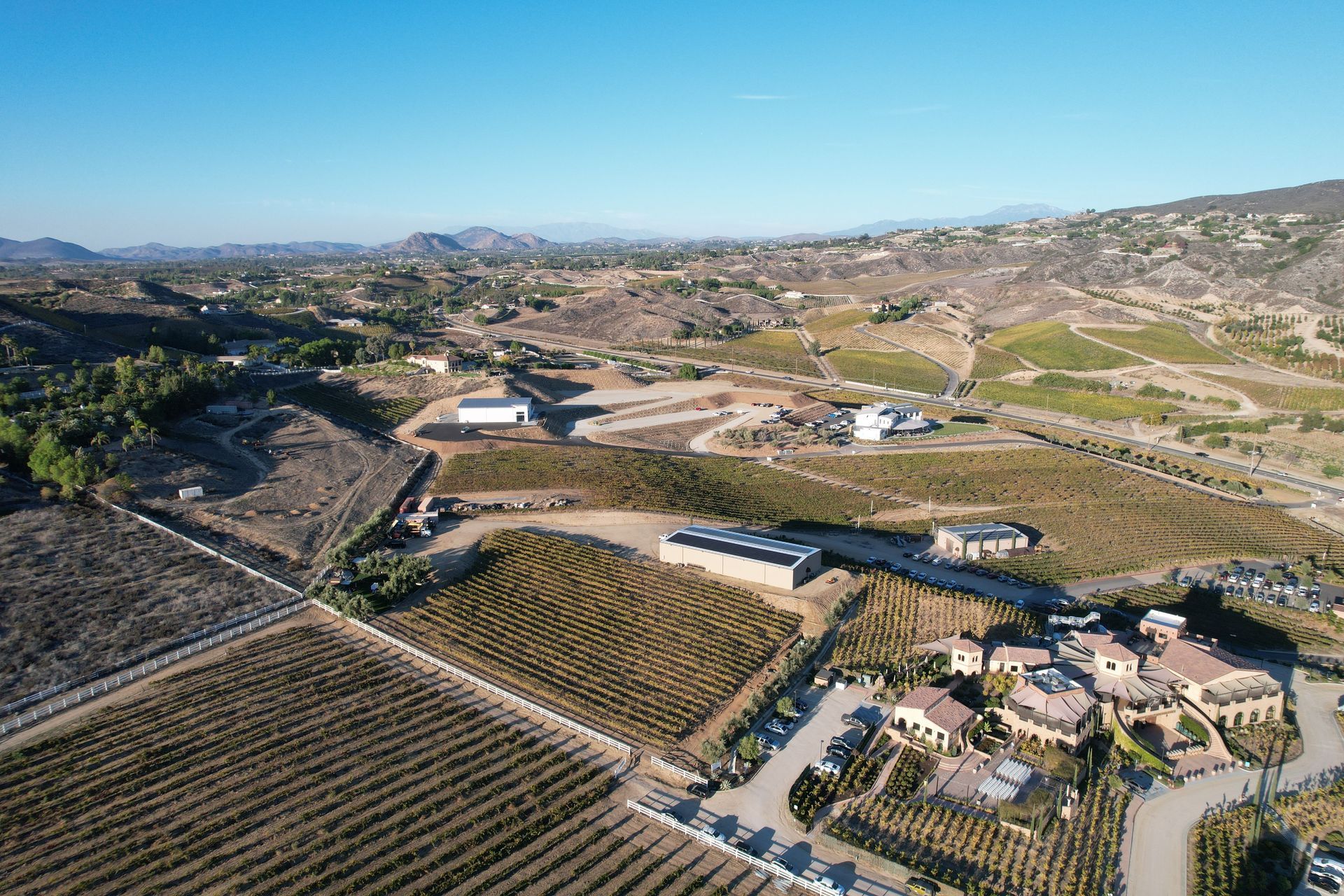
Southern California's inland counties sit primarily in Winkler Regions III and IV. The Temecula Valley AVA — in Riverside County, one of MHV's primary service counties — accumulates approximately 3,598 GDD , placing it solidly in Region III to IV. San Bernardino Valley and most of Riverside County's inland sites run at similar or higher heat accumulations. Coastal Orange County properties benefit from marine influence and can run considerably cooler, closer to Region II in the best-sited locations.
What this means practically: varieties that peak in Region I and II (Pinot Noir and Chardonnay grown for cool-climate elegance) face real challenges without active management in the Inland Empire. Mediterranean varieties bred for similar heat and drought — Syrah, Grenache, Viognier, Tempranillo — are much stronger starting points for most SoCal home vineyard owners. That said, with the right vineyard management program, the selection can be broader than most assume.
The Best Red Wine Grapes for Southern California Home Vineyards
Syrah — The Most Heat-Reliable Wine Grape in SoCal
Syrah is the single strongest recommendation for inland Southern California. Originally from the Rhône Valley of southern France — a region with long, hot, dry summers remarkably similar to San Bernardino and Riverside counties — Syrah is built for conditions that stress more delicate varieties. The Temecula Valley Winegrowers Association lists Syrah as one of their primary varieties, and it performs consistently across the region's Region III/IV heat profile, producing deeply colored, structured reds with black fruit, pepper, and aging potential.
Syrah also carries lower Pierce's disease susceptibility relative to the high-risk varieties like Chardonnay or Pinot Noir, which matters enormously in SoCal's sharpshooter-prone areas. For home vineyard owners who want a world-class red without the management complexity of more fragile varieties, Syrah is where to start.
Grenache — High Heat, Bold Flavors, Serious Versatility
Grenache (Garnacha in Spain, where it originated) is equally well-adapted to SoCal's inland heat. Widely grown across Temecula and the broader South Coast AVA, Grenache ripens reliably in Region III/IV conditions and produces wines that range from lighter, raspberry-forward reds to rich, structured blending grapes. It is one of the three varieties in GSM (Grenache-Syrah-Mourvèdre) blends — one of the most compelling wine styles a SoCal estate vineyard can produce. Grenache also makes exceptional rosé, an increasingly popular option for home winemakers.
A practical advantage: Grenache tends to recover more quickly from irrigation or heat stress events than Cabernet Sauvignon, making it more forgiving for owners learning their property's rhythms in the first few seasons.
Petite Sirah — The UCCE-Proven Heat Performer
Petite Sirah earned formal validation as a heat-tolerant variety through UC Cooperative Extension trials. UCCE viticulture specialist Dr. Jim Wolpert tested 20 red wine grape varieties from warm-climate origins at the UC-Kearney Research and Extension Center in Parlier, California. Petite Sirah ranked among the top performers when evaluating both yield and fruit quality in high-heat conditions — alongside Petit Verdot and Tannat, two varieties now gaining traction among Temecula Valley growers.
Petite Sirah is classified as having intermediate Pierce's disease susceptibility per UC IPM — manageable with the right protocol, not in the high-risk category. The result is a deeply colored, tannic red with excellent aging potential and strong performance in the heat zones typical of MHV's service area.
Zinfandel — California's Heritage Wine Grape
Zinfandel has grown in California's warm inland valleys since the Gold Rush era. It is highly heat-tolerant, productive, and produces wines ranging from jammy and fruit-forward to complex and age-worthy depending on canopy management and harvest timing. The Temecula Valley community grows it successfully, and it performs well across San Bernardino and Riverside County sites with adequate drainage.
One important management note: Zinfandel sets fruit unevenly, meaning clusters can contain both raisined and underripe berries at harvest. Careful canopy management significantly improves the outcome — this is precisely where a professional vineyard management plan converts a frustrating harvest into a quality one.
Cabernet Sauvignon — Premium Potential, Site-Dependent
Cabernet Sauvignon is the most-requested variety among SoCal home vineyard planning conversations — and one of the most widely planted in Temecula — but it requires the right site and active management to deliver quality results inland. At Region III/IV temperatures, Cabernet can overripen rapidly in August and September, pushing toward high-alcohol, low-acid wines without attentive canopy management and harvest timing decisions.
On the upside, the UC IPM classifies Cabernet Sauvignon as having intermediate Pierce's disease susceptibility — better than Chardonnay or Pinot Noir — and with proper rootstock selection, quality results are achievable on the right inland SoCal sites. If Cabernet is your goal, the vineyard consultation is where we assess whether your specific property — its elevation, aspect, drainage, and microclimate — can deliver on that ambition.
White Wine Grape Varieties Worth Planting in Southern California
Viognier — The Aromatic White That Thrives in SoCal Heat
For white wine production in inland SoCal, Viognier is the strongest starting recommendation. Another Rhône Valley native bred for warm, dry growing conditions, Viognier produces wines with distinctive aromatic profiles — stone fruit, apricot, and honeysuckle — that read as genuinely distinctive rather than generic. The Temecula Valley Winegrowers Association lists Viognier as a primary white variety in the region, and it performs consistently across Region III/IV heat profiles.
In very hot inland sites, Viognier is best harvested slightly early to preserve natural acidity. This is a nuance that experienced harvest management converts directly into a better wine.
Muscat Canelli — Heat-Hardy, Aromatic, and Authentic to the Region
Muscat varieties carry deep roots in Southern California's wine history. Muscat Canelli (Muscat Blanc à Petits Grains) is heat-tolerant, productive, and produces wines that are aromatic and expressive — dry or off-dry depending on the winemaking approach — making it one of the most approachable white wine grapes to grow and ferment in SoCal. It is among the 30+ varieties grown across Temecula Valley's 42 vineyards, which provides regional confirmation that it belongs in the conversation for SoCal home vineyard planning.
Tempranillo — The Warm-Climate Surprise
Tempranillo, Spain's dominant red grape, is increasingly planted across Temecula and the South Coast AVA. It handles heat better than Cabernet Sauvignon in many SoCal sites, ripens with good natural acidity, and produces structured, food-friendly reds with excellent value. For home vineyard owners interested in something less expected than Syrah or Zinfandel, Tempranillo is worth serious consideration.
The Pierce's Disease Factor: Why This Changes Variety Selection in SoCal
No guide to SoCal wine grape varieties is complete without addressing Pierce's disease directly. Caused by the bacterium Xylella fastidiosa and spread primarily by glassy-winged sharpshooters, Pierce's disease is one of the most serious threats facing home vineyards throughout San Bernardino, Riverside, and Orange County. Infected vines deteriorate over one to three growing seasons — much faster in young vines, and fastest in the most susceptible varieties.
The UC Statewide IPM Program classifies wine grape variety susceptibility on a spectrum. Per their guidelines:
- Highly susceptible (poor recovery): Pinot Noir, Chardonnay, Barbera, Mission
- Intermediate susceptibility: Cabernet Sauvignon, Petite Sirah, Merlot, Sauvignon Blanc, Thompson Seedless
- Better recovery rates: Chenin Blanc, Ruby Cabernet, White Riesling, Sylvaner
The UC IPM guidance is direct: "If a vineyard is near an area with a history of Pierce's disease, plant varieties that are less susceptible to this disease." For most SoCal inland sites, that means selecting from the intermediate or lower-susceptibility categories — or partnering with a management team that holds the specific license and training to actively counteract the disease in the vineyard.
MyHomeVineyard.com holds the specific license and specialized training to counteract and subdue Pierce's disease — one of very few home vineyard companies in California that does. This is not a generic pest management credential; it is what allows clients to successfully grow varieties that would otherwise carry prohibitive risk in the region. A client in Claremont — well into San Bernardino County's inland territory — grew Pinot Noir under MHV's full management program. That wine won Best in Class Pinot Noir at the San Diego State Fair in 2021. The right management partnership expands what is possible considerably beyond what general guidance suggests.
For a complete breakdown of how Pierce's disease is managed in SoCal home vineyards, including the XylPhi-PD bacteriophage treatment, read our post on Pierce's Disease Treatment for Southern California Vineyards.
Matching Your Variety to Your Property's Microclimate
The variety guides above are starting frameworks. What actually determines the right variety for your specific vineyard is a site-by-site microclimate assessment. Every SoCal property is different. A Riverside County property at 2,000 feet elevation with a southwest-facing slope has a fundamentally different heat profile than a San Bernardino Valley floor site three miles away. A Rancho Cucamonga property at the base of the San Gabriel Mountains catches different cooling patterns than an Anaheim Hills property influenced by marine air from coastal Orange County.
Each of these microclimates produces subtly different heat accumulation, soil drainage patterns, and disease pressure — which is why a custom variety selection plan matters more than any general list. The MyHomeVineyard.com vineyard installation process begins with this assessment: mapping your property, measuring its characteristics, identifying the variety — or two-variety combination — most likely to produce the wine you want from your specific land.
By the time the first vine goes in the ground, every aspect of the decision has been thought through from harvest to bottle. For context on what that overall investment looks like from planning through production, see our complete breakdown of home vineyard costs in Southern California.
What Your Variety Choice Means for Your Wine
Variety selection is not just a viticulture decision. It is a winemaking decision, and the two need to be made together. As the only private nano-batch winery in California producing custom wine for individual home vineyard owners, MyHomeVineyard.com makes wine from what clients grow — so what you plant determines what ends up in your bottle. The Certified Sommelier and Winemaker on staff, with 12 years of winemaking experience, guides every step from harvest through fermentation, aging, and bottling at the Type 02 Licensed Winery in Historic Rancho Cucamonga.
- Syrah: Full-bodied reds with dark fruit, pepper, and structure. Can produce elegant rosé in lighter extraction styles.
- Grenache: Versatile — fruit-forward reds, aromatic rosé, or GSM blends with Syrah and Mourvèdre.
- Petite Sirah: Deep, inky, tannic reds with strong aging potential. Excellent single-varietal or as a blending component.
- Zinfandel: Classic California style — generous, fruit-forward, approachable. Harvest timing is critical in hot years.
- Cabernet Sauvignon: When the site cooperates: structured, premium red with real aging potential and cellaring value.
- Viognier: Rich, aromatic whites with stone fruit — apricot, peach, honeysuckle. Best harvested slightly early in very hot inland sites.
- Muscat Canelli: Aromatic, crowd-pleasing whites. Can be made dry or off-dry depending on the winemaking goal.
- Tempranillo: Structured, food-friendly reds with good natural acidity — an underplanted gem in SoCal estate vineyards.
When you hire MyHomeVineyard.com, you're not just getting a vineyard. You're getting a piece of productive art — one that produces your custom wine, from your property, year after year.
Frequently Asked Questions: Wine Grapes for SoCal Home Vineyards
What is the easiest wine grape to grow in Southern California?
Syrah and Grenache are generally the most forgiving wine grapes for SoCal's inland heat zones. Both are Mediterranean varieties bred for conditions similar to San Bernardino and Riverside counties — hot, dry summers with low humidity. They carry lower Pierce's disease risk than high-susceptibility varieties and consistently produce quality fruit even in challenging heat years. For a first vineyard planting, either is an excellent starting point.
Can you grow Pinot Noir in inland Southern California?
Yes — with the right management partner. Pinot Noir is classified by UC IPM as highly susceptible to Pierce's disease, which is endemic across most SoCal inland counties. Without active PD management, the risk is significant and recovery is unlikely once symptoms appear. However, under MyHomeVineyard.com's licensed Pierce's disease management program, clients have successfully grown Pinot Noir in inland San Bernardino County. A Claremont estate did exactly this, producing a 2021 Pinot Noir that won Best in Class at the San Diego State Fair.
How does Pierce's disease affect variety selection in Southern California?
Pierce's disease (caused by Xylella fastidiosa , spread by glassy-winged sharpshooters) is the primary disease constraint on SoCal home vineyard variety selection. Per UC IPM guidelines, Pinot Noir and Chardonnay are highly susceptible with poor recovery rates; Cabernet Sauvignon, Petite Sirah, and Merlot carry intermediate susceptibility; Chenin Blanc and Ruby Cabernet show better recovery. Growers near areas with PD history should select less-susceptible varieties or partner with a management company licensed to actively suppress the disease.
When do wine grapes get harvested in Southern California?
Harvest timing in SoCal's inland heat zones typically runs from August through October, depending on variety and specific microclimate. Viognier often ripens first in very hot inland sites, sometimes in August. Syrah and Grenache typically peak in September. Zinfandel and Cabernet Sauvignon often extend into early October. Exact timing is determined by Brix (sugar level), titratable acidity, and flavor development — decisions that experienced viticulture management significantly improves in terms of wine quality.
Recent Posts